Flagship program since 2011

Health Professions Affinity Community

In HPAC, student teams find a health challenge in their own community, research it, design a response with the people affected, and share what they learned. Along the way, they come to see themselves as researchers, health professionals, and community leaders.

Watch: Collinwood High School students run a senior health fair, May 18, 2016. About six minutes. All HPAC videos.

2011founded at Northeast Ohio Medical University
10,000+young people in HPAC-model projects across Ohio
173sites over ten years, nearly half rural or small town
Every springScholars Day, since April 2013

Site and student counts come from HPAC program records summarized in "Hope as Infrastructure" (Weisblat, 2026) and the 2018-19 program evaluation.

Our story

More than a decade of student-led change

HPAC was created in 2011 at Northeast Ohio Medical University by Dr. Gina Z. Weisblat, with Dr. Erik Porfeli as co-creator. The first teams formed at the Cleveland School of Science and Medicine and MC2 STEM High School in the winter of 2012. From there HPAC grew to serve students from middle school through medical school at sites across Ohio, with AmeriCorps members, medical and pharmacy students, and college coaches as mentors, and later ran statewide through the Ohio Public Health Ecosystem and the 4-H network.

Today HPAC runs through the Citizenship Health Institute, in partnership with Strengthening Our Students, with Cuyahoga Community College hosting the program for Tri-C High Tech Academy students.

HPAC alumni return to speak with current students and become mentors, and students and families are connected to resources when needs come up.

HPAC overview, about three minutes (2023).
Timeline

How HPAC grew

2011Weisblat and Porfeli begin at NEOMED. Pilot year at John Hay (Cleveland School of Science and Medicine) and MC2 STEM, with the first Community Action Grants for student projects.

Source: HPAC program summaries and the 2013 year-one report.

2013First Scholars Day, April 27 at NEOMED, hosted by Bio-Med Science Academy. Twenty-four programs in 17 high schools, a college, two universities and NEOMED. AmeriCorps funds a 20-member rural corps, and the Martha Holden Jennings Foundation funds five rural schools.

Source: HPAC Summary, May 2013; 2013 AmeriCorps and Jennings materials.

2014Scholars Day draws nearly 400 students from 19 counties, with 52 oral presentations and 63 posters. Student teams win 15 mini-grants.

Source: Scholars Day 2014 program materials; 2014 grants list.

2015 to 2016Scholars Day reaches 85 schools and 174 presentations. HPAC is presented at the Beyond Flexner Alliance conference in Miami. Southern Ohio hubs open through HealthPath funding at NEOMED, the University of Cincinnati and Youngstown State.

Source: Beyond Flexner 2016 deck; 2018-19 program evaluation.

2017The Junior Community Health Worker track launches at Lincoln West and CSSM with MetroHealth. Forty AmeriCorps members serve at eight hubs statewide. HPAC is a finalist for the national Sherman Award, and 559 students present at Scholars Day.

Source: Junior CHW guide (2017); 2017-18 site list; 2026 evaluation presentation.

2018 to 2019HPAC reaches more than 2,000 youth across 27 Ohio counties. A second, southern Scholars Day opens at the University of Dayton. More than 850 register for the 2019 Scholars Day.

Source: 2018 program records; Lifeline, Summer 2019; 2018-19 evaluation.

2020 to 2021HPAC moves online during COVID with a virtual Scholars Day. The model is presented at "Building Community-Centered Health" (October 2020), and ten delivery models are written up so schools, clubs, clinics and colleges can run HPAC their own way.

Source: October 2020 conference deck; HPAC Models and Overview (January 2021).
2023HPAC project workshops run with Strengthening Our Students in Cleveland, and a Junior HPAC runs at SOS summer camp.
Source: 2023 workshop deck; camp photo deck.

2026 to 2027HPAC comes to Tri-C High Tech Academy: 22 capstone teams building toward Scholars Day on April 16, 2027. A twelve-year alumni study, a narrative inquiry with former students, and a rural chapter are underway.

Source: HTA program packet (October 2026); research workspace.

The process

Each project follows IDEAS

I

Identify

Teams name their strengths, list the challenges they see, and choose an issue they care about.

D

Develop

Teams research the issue, write strong questions, and develop a plan and a grant request.

E

Enact

Teams carry out their project with community partners.

A

Assess

Teams learn to measure what they did and what changed.

S

Share

Teams present posters and talks at Scholars Day and in their home schools.

How it works

A year in an HPAC

The advisor guide lays out a 30 to 36 week year, with semester and quarter versions for schools that need them. For what a real year looked like, see the 2013 to 2014 meeting calendar of the Akron hub (PDF): 22 after-school meetings from "What is HPAC?" in August to practice presentations in April, with a kick-off at NEOMED, a career night, and interviews with health professionals and community members along the way.

Fall: who we are

Learn what HPAC is, name team assets, build norms and a mission, set student roles, and attend the kick-off. Teams survey health interests and community assets.

Winter: what we know

Research the issue, meet experts and community members, gather local data, and write a grant request for the project.

Spring: what we did

Carry out the project with partners, measure what changed, and present a poster or a five to eight minute talk at Scholars Day.

What every team must show

Cited research that proves six things: relevance, community impact, the team's contribution, cost, the non-financial capital available, and passion. Students may use AI to help with the work, never to come up with the ideas.

Mentors and grants

Medical and pharmacy students, AmeriCorps members, college coaches and alumni mentor the teams. Community Action Grants of about $150 to $300 fund projects, reviewed by a panel that gives written feedback.

Scholars Day

Registration, a welcome, judged oral sessions, lunch and a health fair, a judged poster session, a parent and advisor session, and awards for the top college, high school and junior high projects. Judges include health professionals and students.

Ten ways to run HPAC

One model, many homes

HPAC has run as a school course or capstone, a mini-academy with monthly ECHO sessions, a traditional after-school club, a community health center program, a career-tech program with online mentoring, a Junior Community Health Worker capstone, an after-school inquiry group, and a college club. The 2021 overview describes each one.

HPAC models and overview (Word)

Junior Community Health Worker track

A two-year high school track inside HPAC, first run in 2017 at Lincoln West and CSSM with MetroHealth. Year one covers inquiry questions, grant writing, speakers, soft skills, leadership and cultural competency. Year two adds grant writing for outside funders, online coursework, a Saturday Academy, anatomy and physiology, and summer CPR and vital signs.

That track has grown into Pathway C of the Citizenship Health CHW Academy, where HPAC students complete Ohio's full community health worker curriculum in grades 10 to 12.

What students gain

Evidence of impact

Numbers below come from the 2018-19 program evaluation, which surveyed 500 active students across about 90 schools, and from multi-year pre and post surveys from 2012 to 2020.

84%can identify pressing concerns in their community because of HPAC
81%can use published research to understand an issue
80%can present their work in public
84%feel more connected to their community because of HPAC

Non-cognitive growth

Pre and post data from 2012 to 2020 show statistically significant gains in motivation, positive social connection, self-agency and self-management. Compared with peers who were not in HPAC, students were more able to break a big idea into steps, more likely to think of a different plan when one fails, and more likely to meet people different from themselves.

Pathways

Nine in ten students surveyed in 2018-19 expected to go to college, and 86 percent believed they would address the social determinants of health in their careers. The 2026 alumni survey finds sustained grant writing, public speaking and networking skills, with alumni in medicine, education, law, the trades and the military.

Ongoing research

A twelve-year look back at HPAC alumni, a narrative inquiry with former students, and a chapter on HPAC in rural Ohio ("Hope as Infrastructure") are underway. See our research.

Program-era surveys were cross-sectional and unpaired; the alumni survey is small and self-selected. We report what the data show and no more.

Student voices

In their words

"I found a voice in me and my voice was finally being heard."HPAC alum, Cleveland School of Science and Medicine
"We weren't doing this as another accomplishment to put on our resumes. We were doing this to make a difference in the community."HPAC alum, Cleveland School of Science and Medicine
"I felt a sense of purpose and meaning, despite being so young and timid."HPAC alum, Norwayne High School, 2015
"Research is not a linear path."HPAC alum, Cleveland School of Science and Medicine
"The most important and most painful lesson I learned was the importance of sustainability."HPAC alum, Norwayne High School
"Perhaps the true goal of HPAC was never to confine students into a career, but to open a world of opportunities and growth for each and every participant."HPAC alum, Norwayne High School, 2015 to 2019
Where HPAC has been

Schools and sites across Ohio

Over ten years HPAC ran at 173 sites. The 2017 to 2018 site list alone names 84 sites in 25 counties, and the 2018 to 2019 southern expansion added 54 more around Cincinnati, Dayton, Marietta and the Ohio River counties. A sample, by region, from the program's site lists.

Greater Cleveland

Cleveland School of Science and Medicine (John Hay), MC2 STEM, Lincoln West, Early College, Ginn Academy, Collinwood, Cleveland School of the Arts, Brooklyn, Garfield Heights, Laurel School, Berea-Midpark, Cleveland State, Baldwin Wallace, Tri-C, MetroHealth, Boys and Girls Clubs, La Esperanza

Akron, Portage and Stark

NIHF STEM, North, Garfield, Buchtel, Firestone, Kenmore, Ellet, University of Akron, Hudson, Twinsburg, Woodridge, Bio-Med Science Academy, Rootstown, Kent Roosevelt, Ravenna, Windham, Field, Crestwood, Hiram College, Kent State, McKinley, Timken, Fairless, Lake, Perry, Alliance, Minerva, Canton South, Mount Union

Eastern and rural Ohio

Malvern, Claymont, Dover, Orrville, Smithville, Norwayne, West Holmes, College of Wooster, Campbell Memorial, Youngstown State, Warren G. Harding, Choffin Career Center, Beaver Local, Lisbon, Columbiana CTC, Grand Valley, Harvey, Fairport Harbor, Lorain, Oberlin, Keystone, Marietta, Frontier, Monroe Central, Belpre, Bridgeport

Southwest and southern Ohio

Withrow, Hughes, Winton Woods, Purcell Marian, North College Hill, Georgetown, Fairfield, Dayton Early College Academy, Global Impact STEM Academy, Stebbins, Sinclair Community College, Wright State, University of Dayton, Hillsboro, Portsmouth, Portsmouth West, Rock Hill, West Union

With thanks

Partners and funders over the years

From the program's own partner and funder list, kept for Scholars Day.

Funders

ServeOhio and AmeriCorps; HRSA Health Careers Opportunity Program; The Cleveland Foundation; Saint Luke's Foundation; HealthPath Foundation of Ohio; Ohio Department of Education; Community Connectors; 21st Century Community Learning Centers

University partners

Baldwin Wallace University; Cleveland State University; Hiram College; Kent State University; Marietta College; Sinclair Community College; University of Akron; University of Cincinnati; University of Dayton; Wright State University, Boonshoft School of Medicine; Youngstown State University

Hospital partners

University Hospitals, Health Scholars Program; MetroHealth, Junior Community Health Worker Program

Community partners

Project ECHO; Community Health Collaborative; Northeast Ohio AHEC; Effective Leadership Academy; Youth Opportunities Unlimited; Neighborhood Connections; StartSOLE; Cleveland Police Foundation; Family Medicine Education Consortium; Upward Bound; Portage County Job and Family Services; Rocking Horse Community Health Center; Greater Cleveland Neighborhood Centers Association; Ohio Colleges of Medicine Government Resource Center; Force for Health

Where HPAC students go

Alumni, now grown

HPAC began in 2011, so its first students are in their late twenties and early thirties. A few of them, with the work they do now.

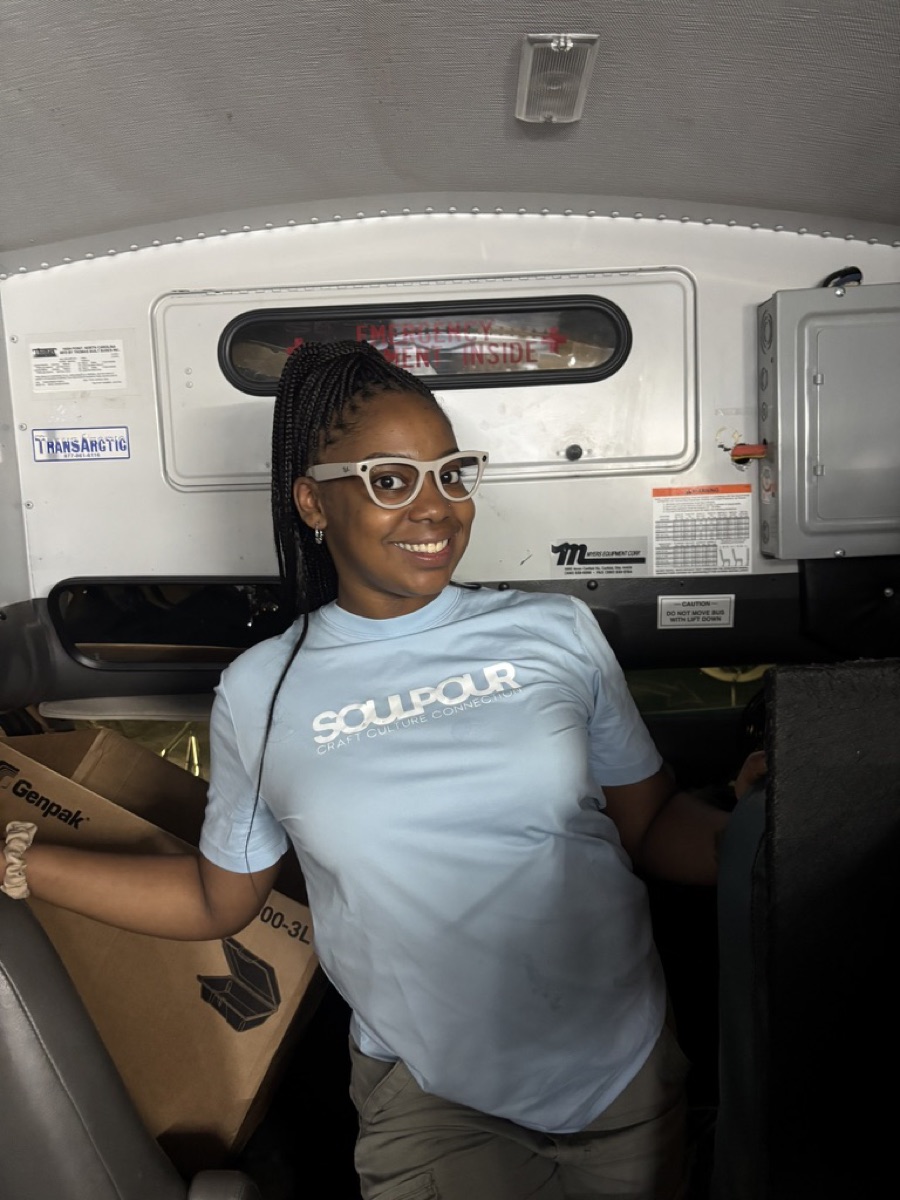
An HPAC alum in a light blue SoulPour shirt smiles inside a converted bus
HPAC alum, founder of SoulPour
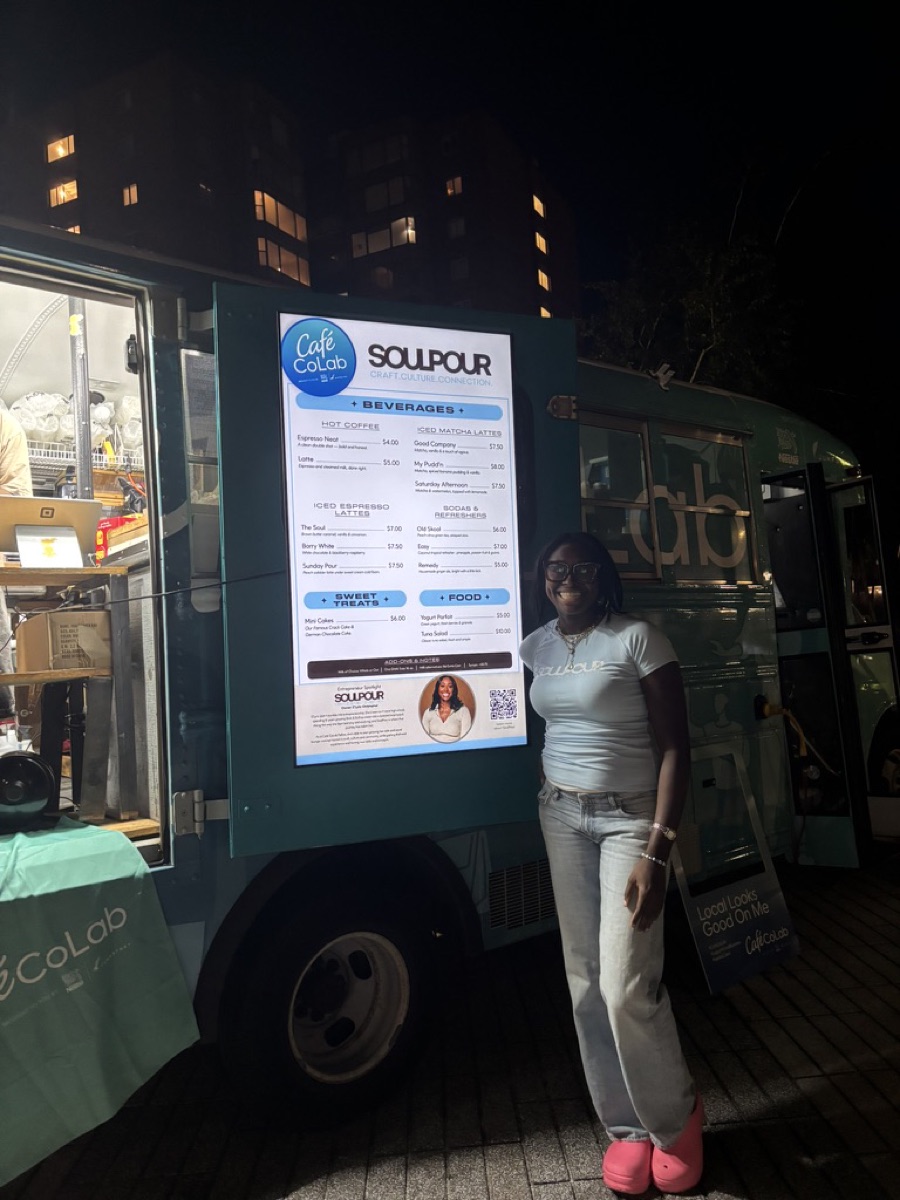
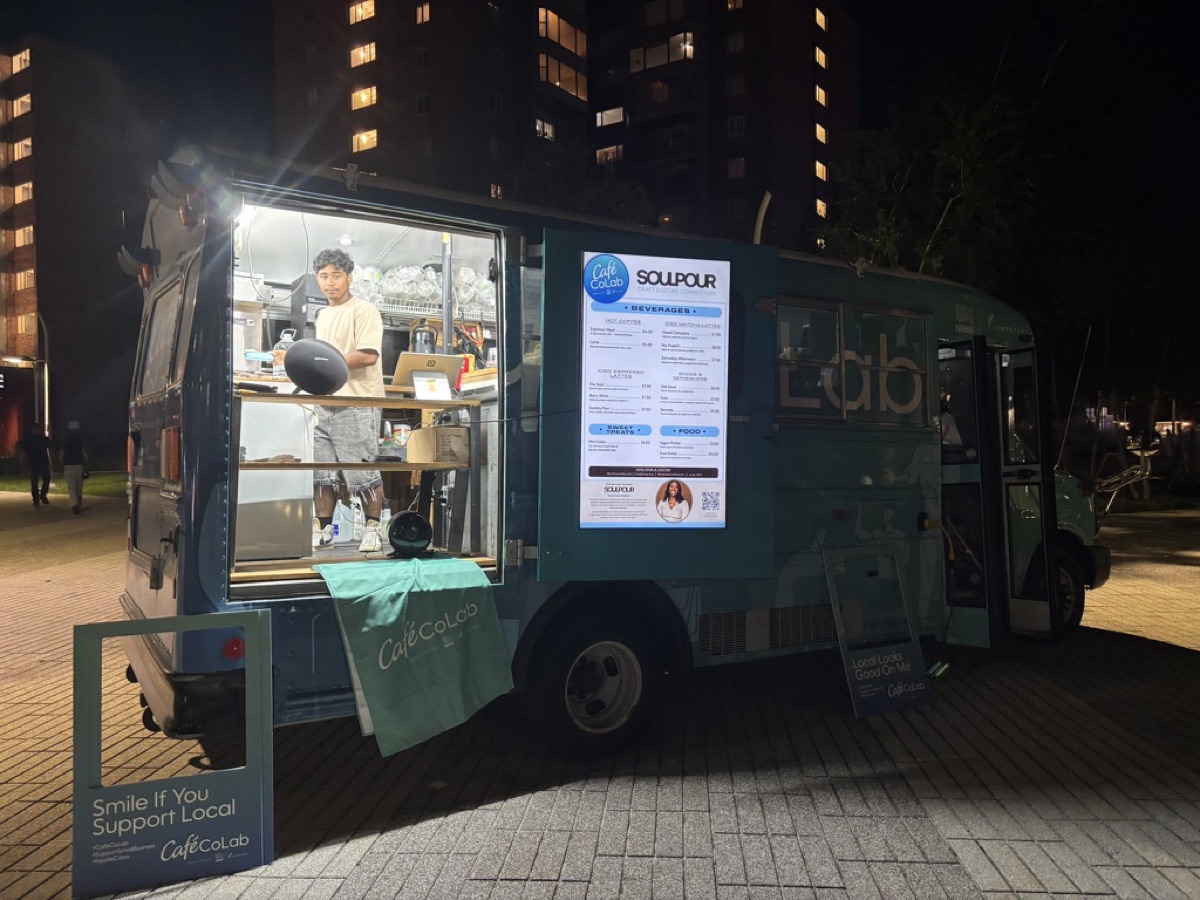
An alum stands beside the lit menu board of the Café CoLab food truck at night
At the Café CoLab truck, Cleveland
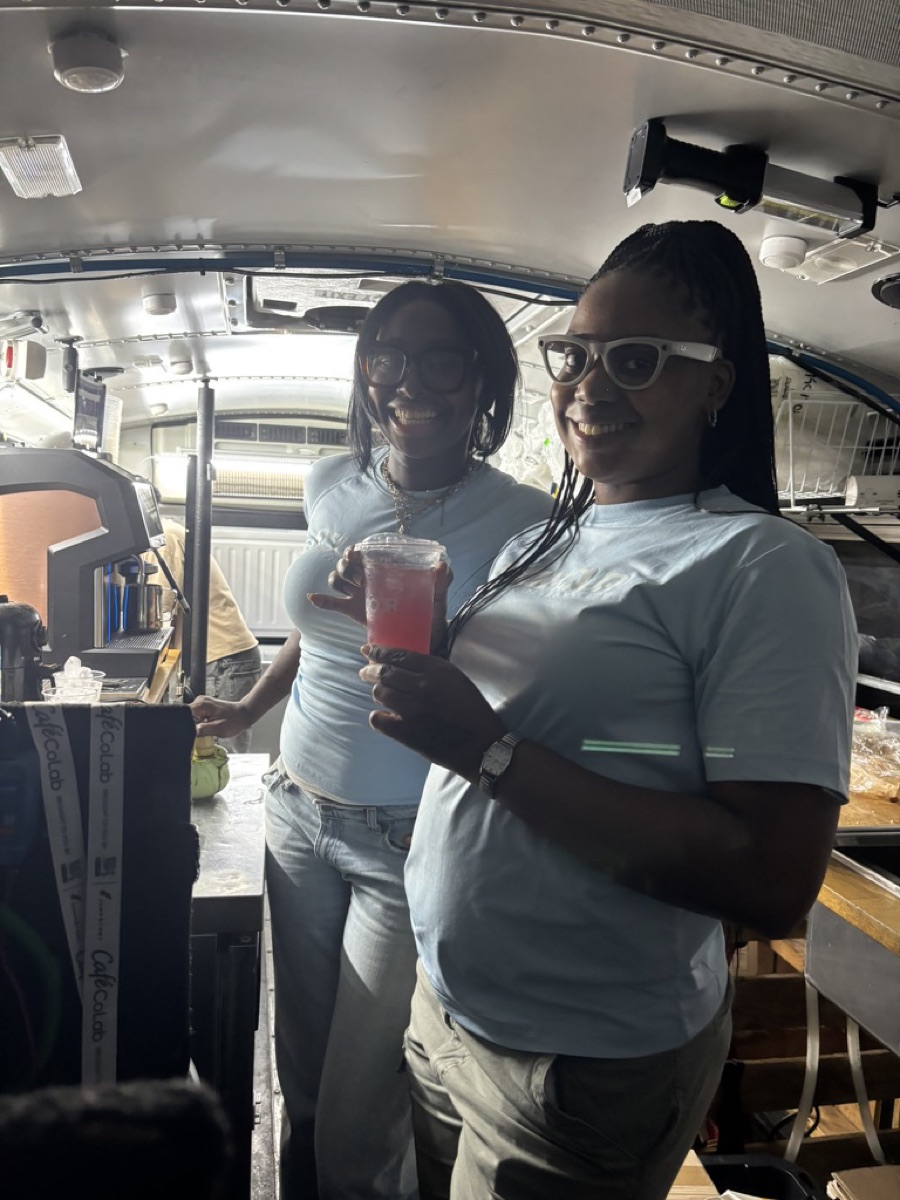
Two women in SoulPour shirts hold up a pink drink inside the truck
Serving the first pour
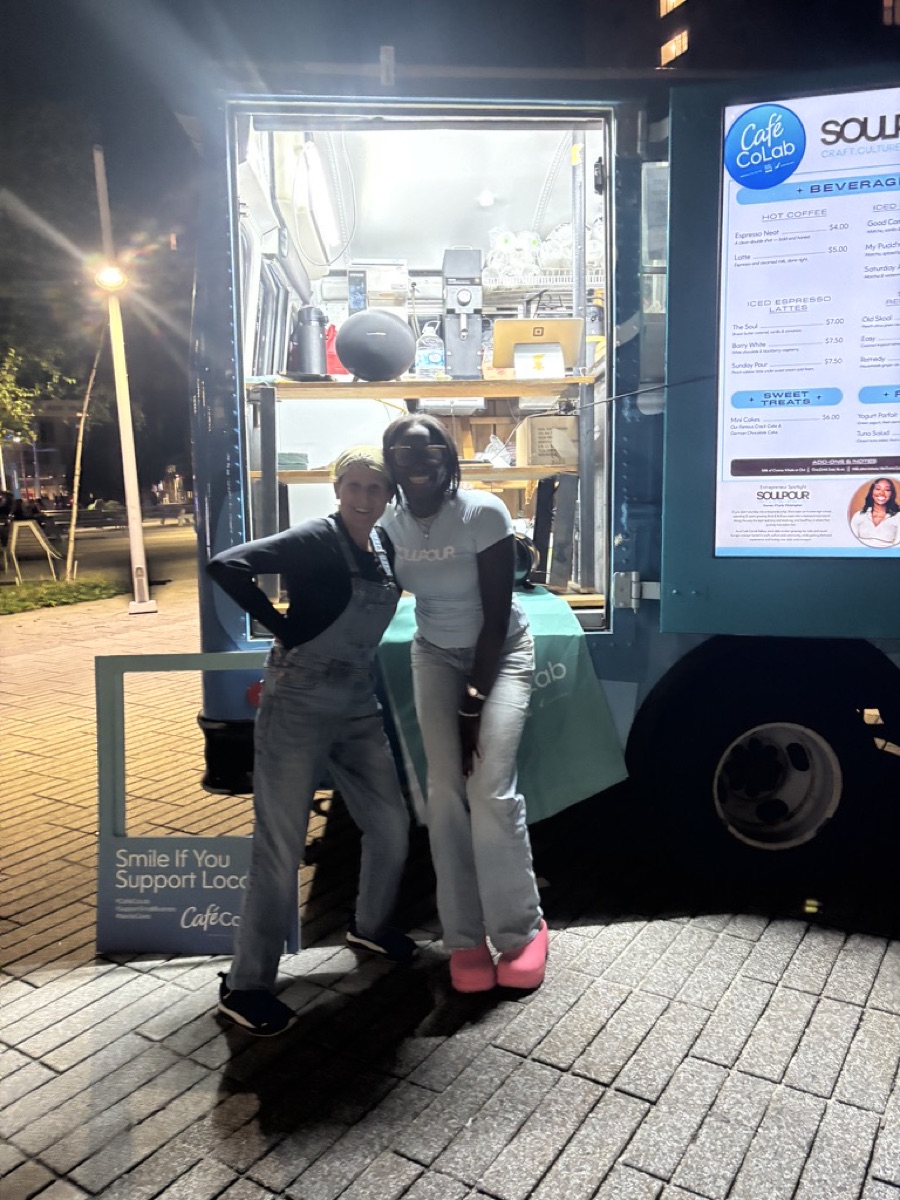
An alum and Gina Weisblat pose in front of the food truck
With CHI's founder on opening night
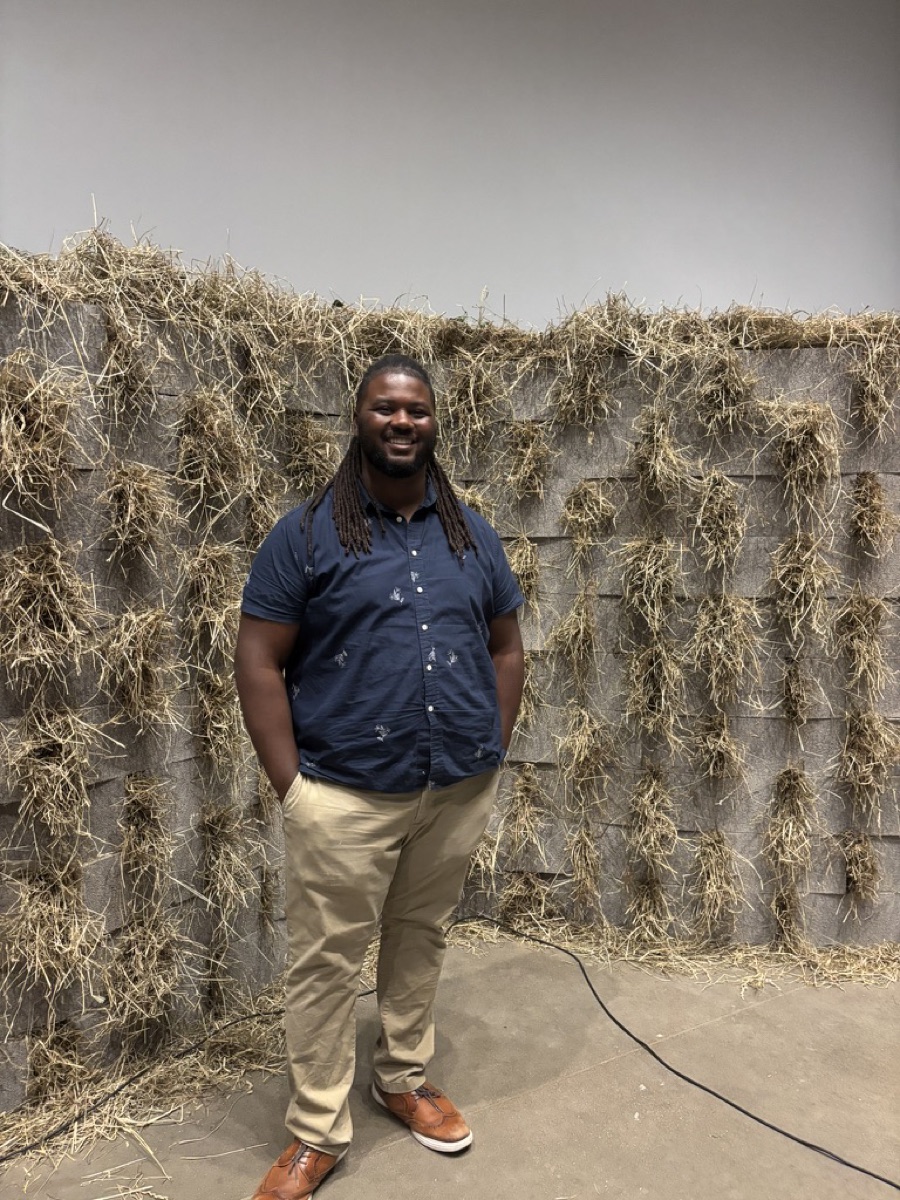
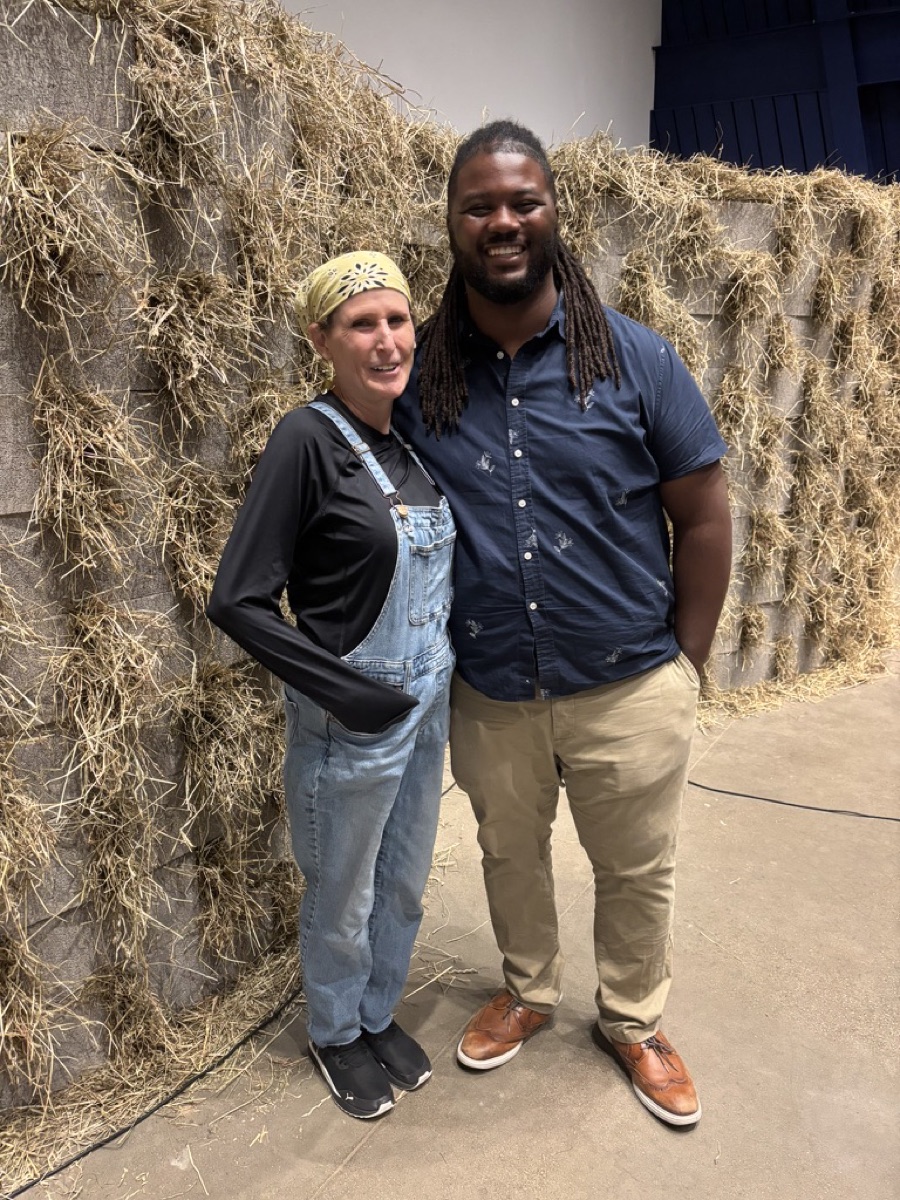
A smiling alum in a navy shirt stands in front of a straw wall at a community event
HPAC alum, Cleveland
An alum and Gina Weisblat pose together at an event
Catching up at a community event
The Café CoLab food truck lit up at night with its serving window open
Café CoLab, where local makers get a window

Alumni are shown with their permission and are not named here. Captions are placeholders until each alum approves their own line.

Moments in time

Conferences, Scholars Days, and the classroom

HPAC students have presented beside medical residents and faculty at the Family Medicine Education Consortium in Cleveland (November 2017), at the Citizenship Health Conference (June 2018), and at Scholars Day (2018). The classroom pictures are from a Lincoln West HPAC session in June 2018. Students are not named.

Family Medicine Education Consortium, Cleveland, November 2017

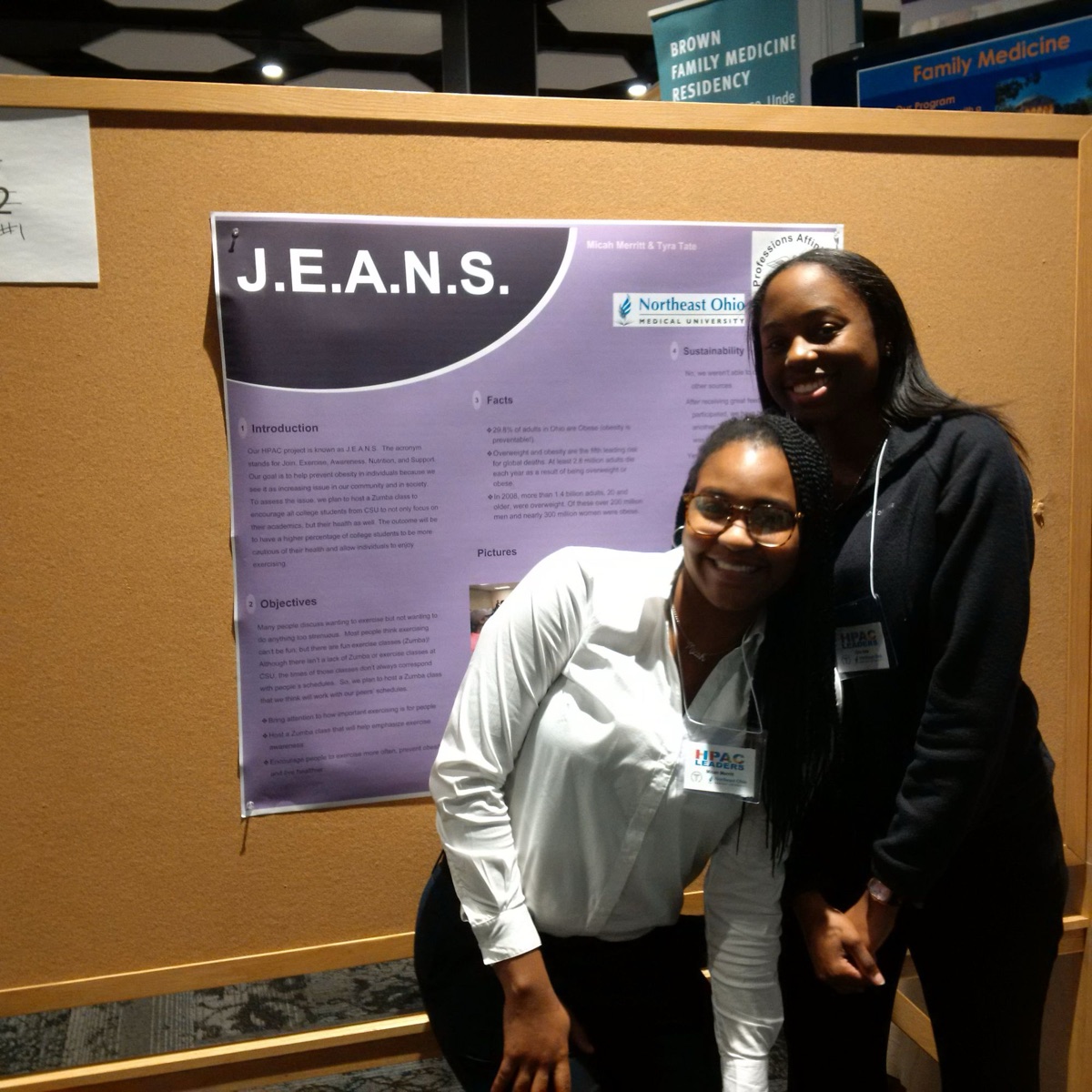
Two students beside the J.E.A.N.S. poster on obesity prevention
J.E.A.N.S.: Join, Exercise, Awareness, Nutrition, Support
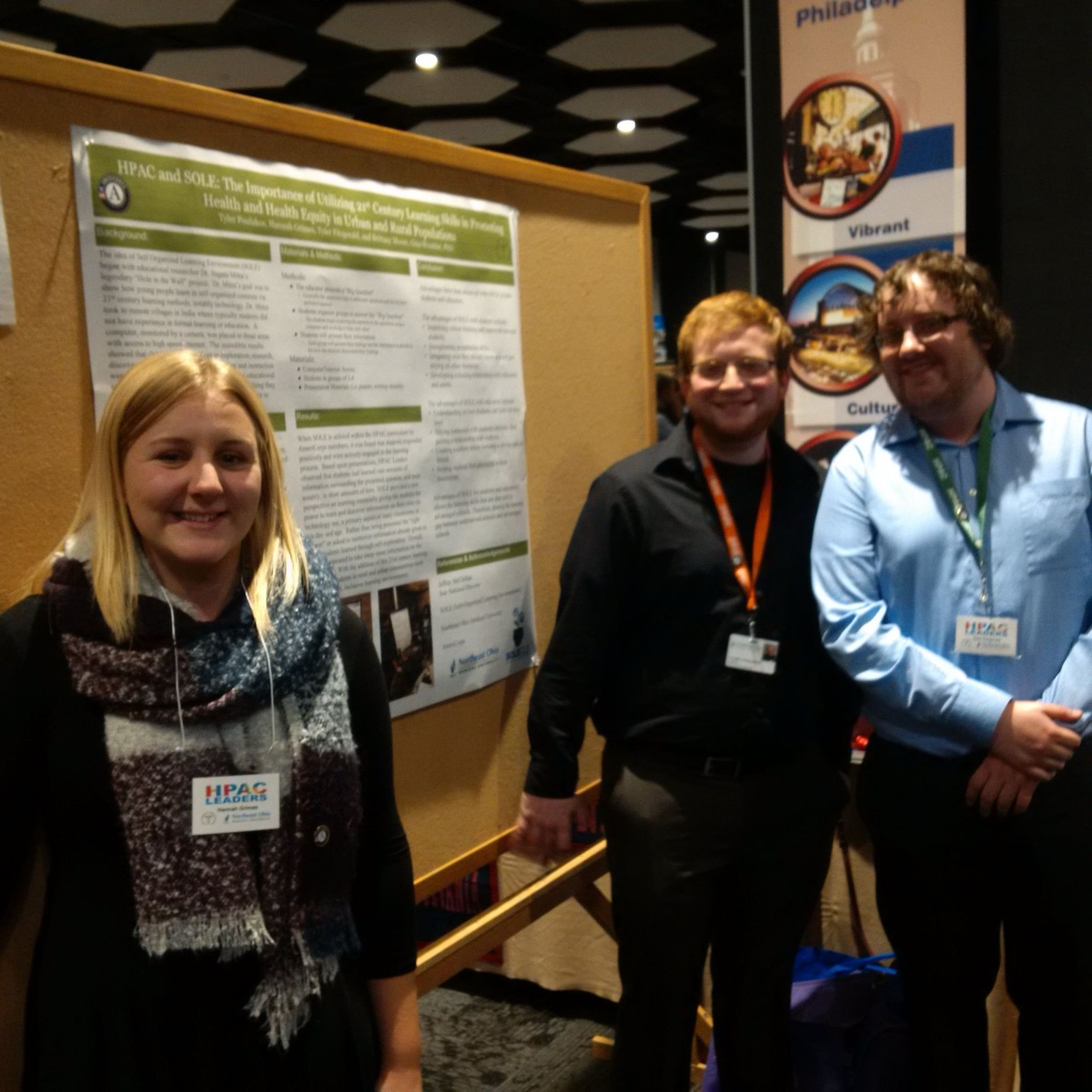
Three AmeriCorps members beside the HPAC and SOLE poster
HPAC and SOLE, presented by AmeriCorps members
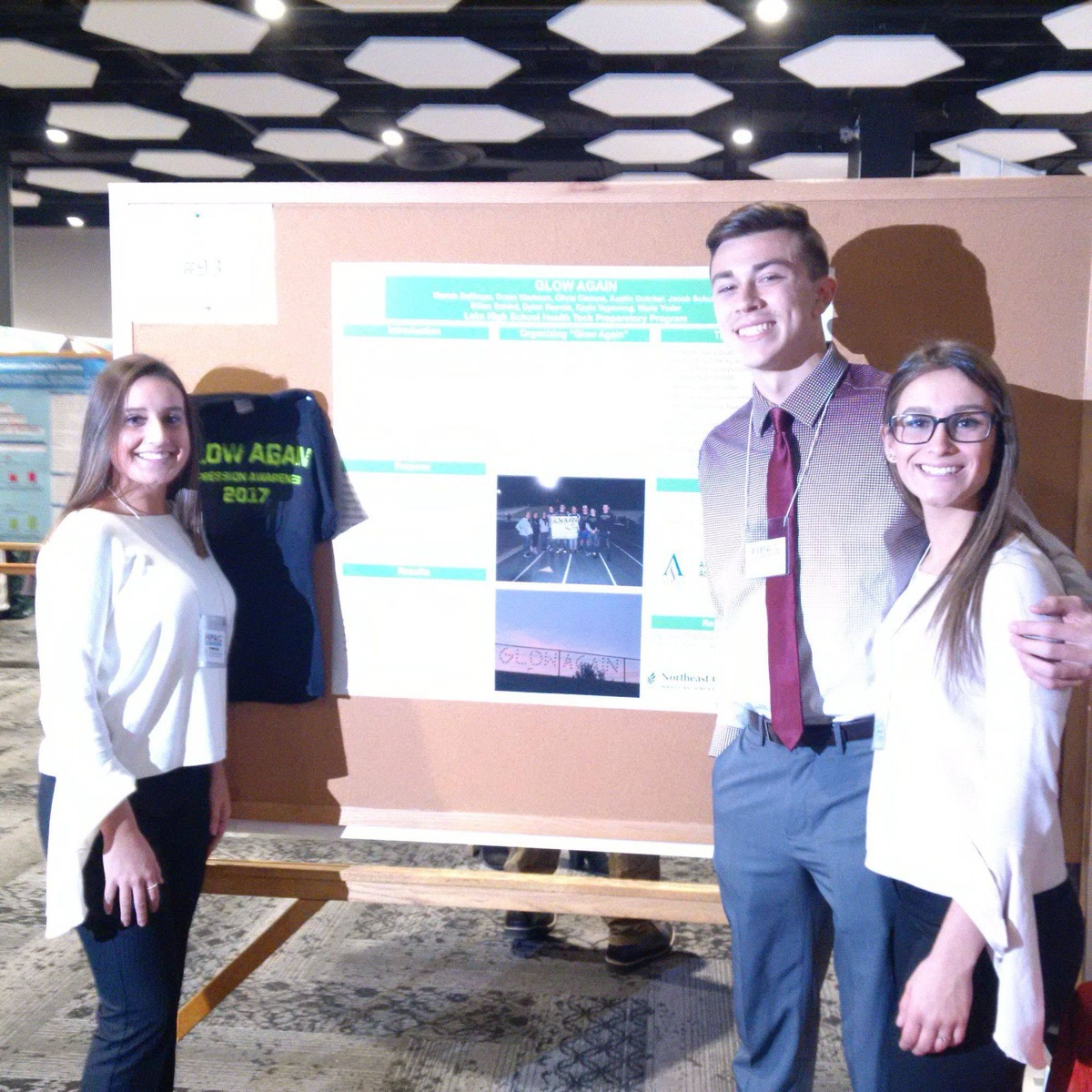
Three students beside the Glow Again poster with a shirt pinned to the board
Glow Again: depression awareness, Lake High School
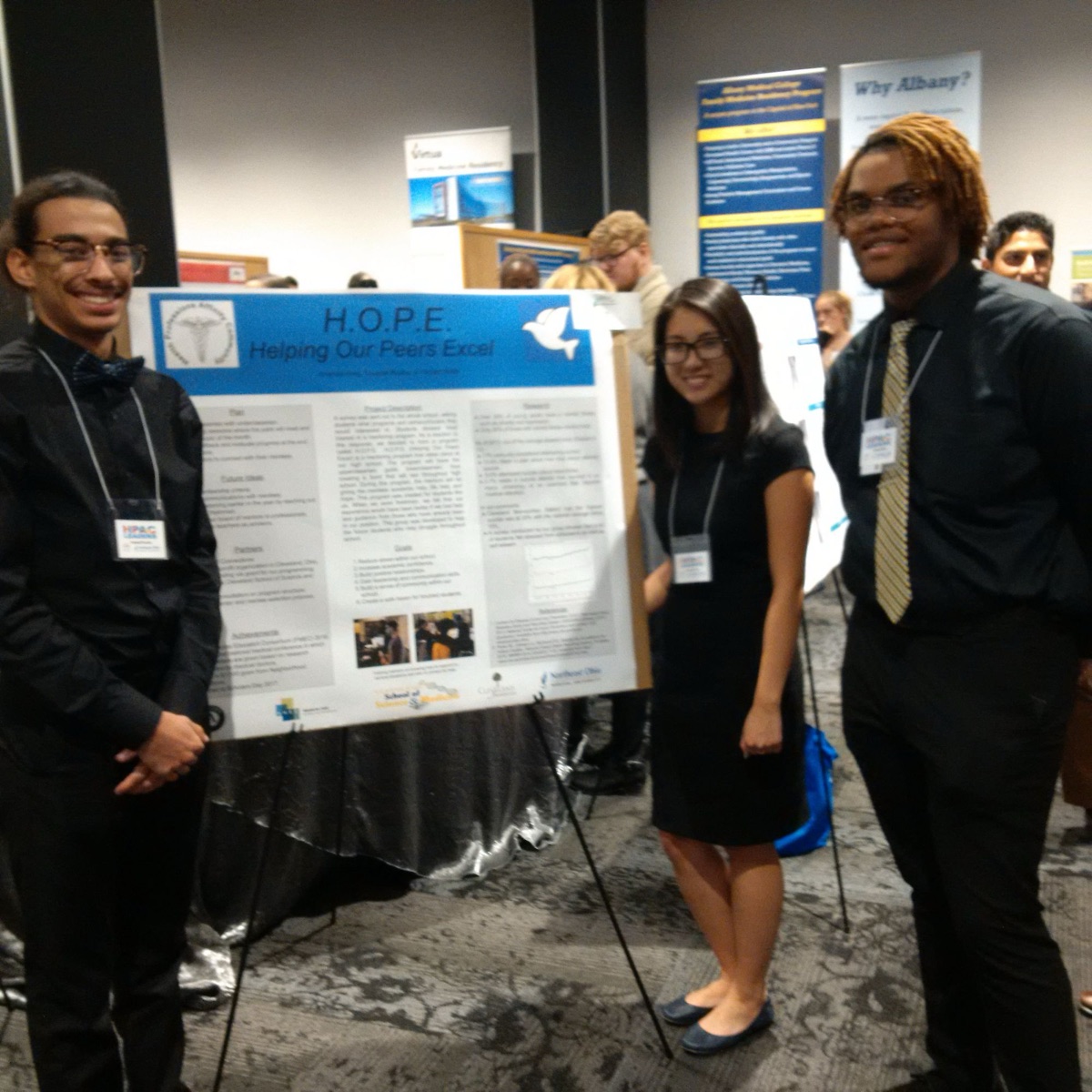
Three students beside the H.O.P.E. poster
H.O.P.E.: Helping Our Peers Excel, Cleveland School of Science and Medicine
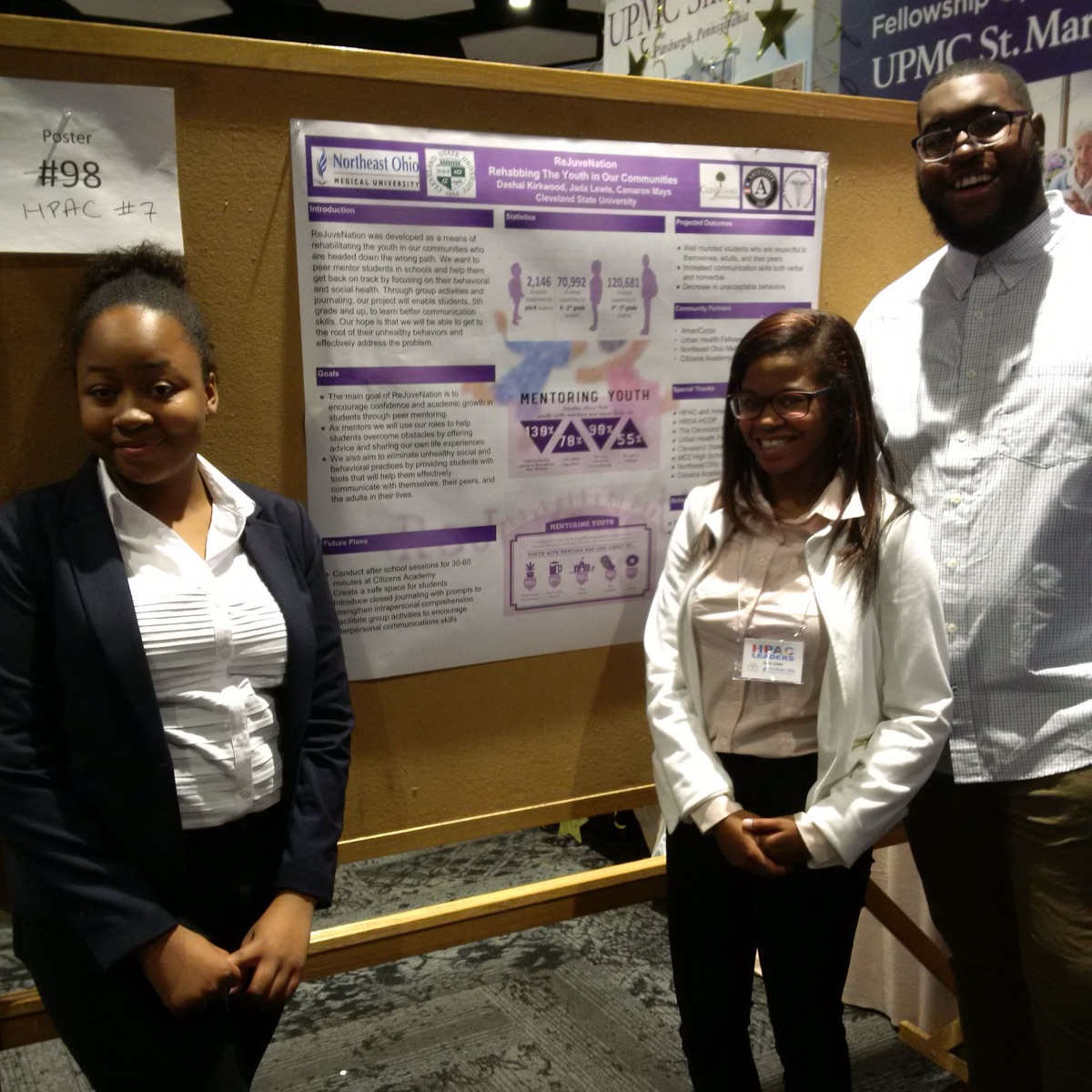
Three college students beside the ReJuveNation poster
ReJuveNation: peer mentoring, Cleveland State University
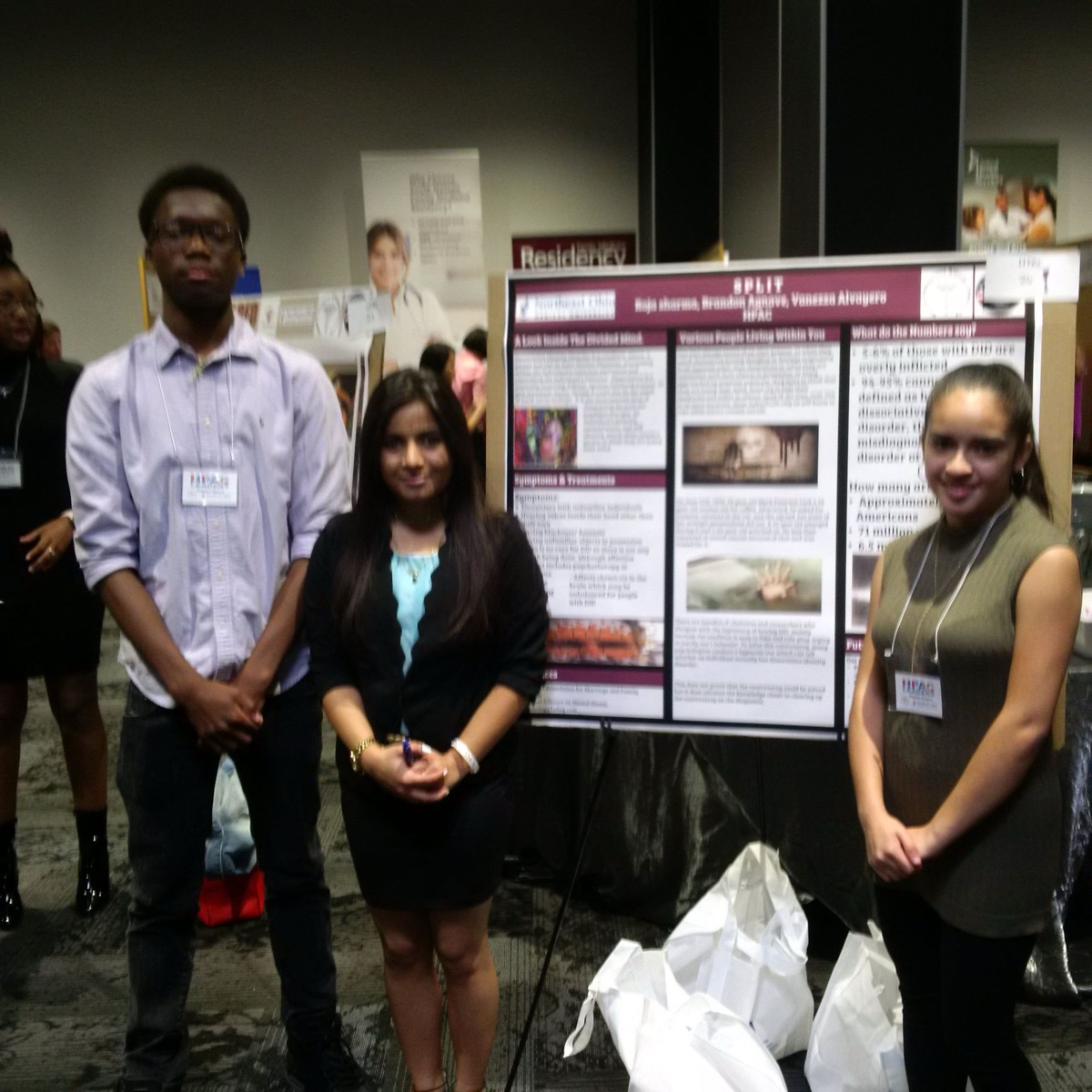
Three students beside the Split poster on dissociative identity disorder
Split: understanding dissociative identity disorder
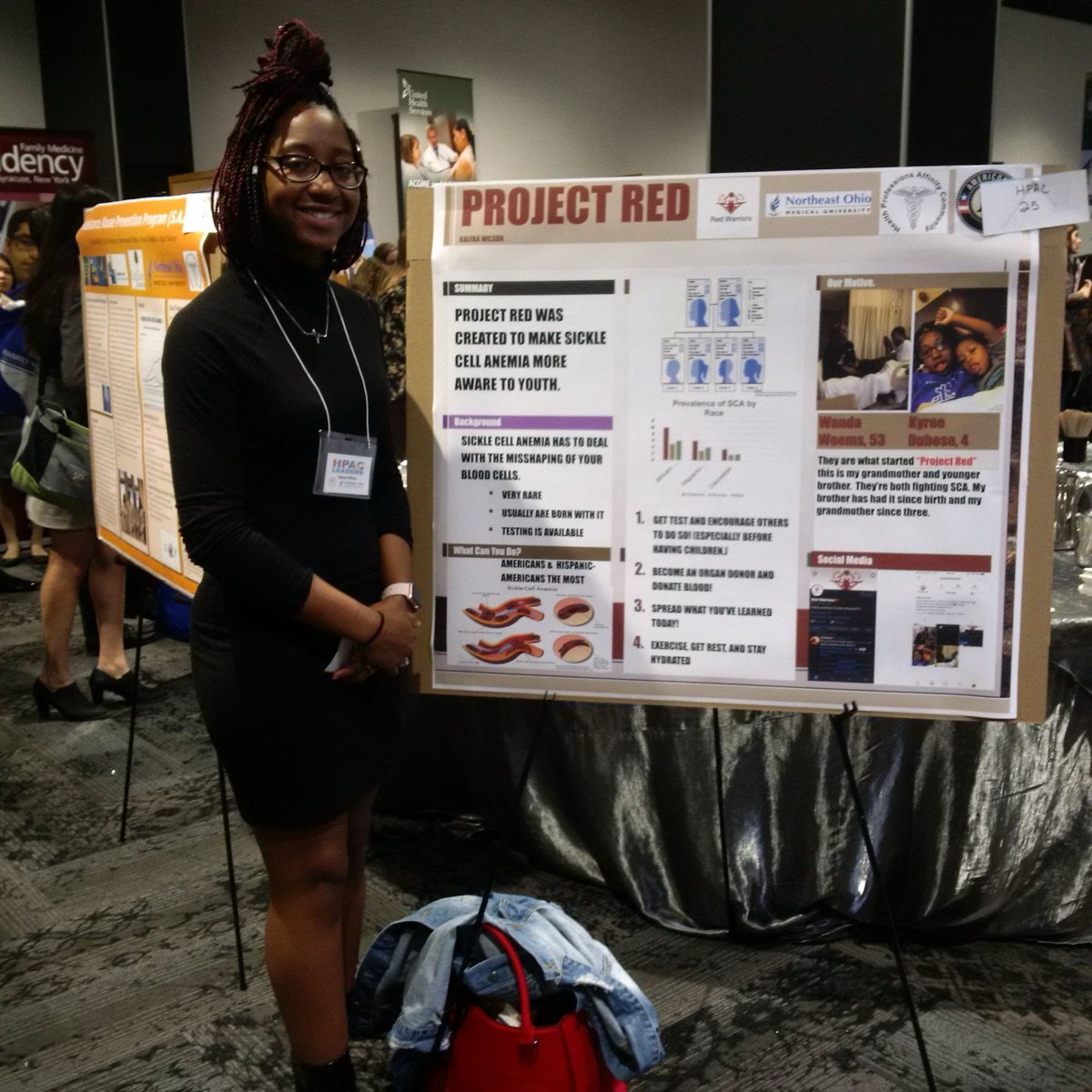
A student beside the Project Red poster on sickle cell anemia
Project Red: sickle cell anemia awareness
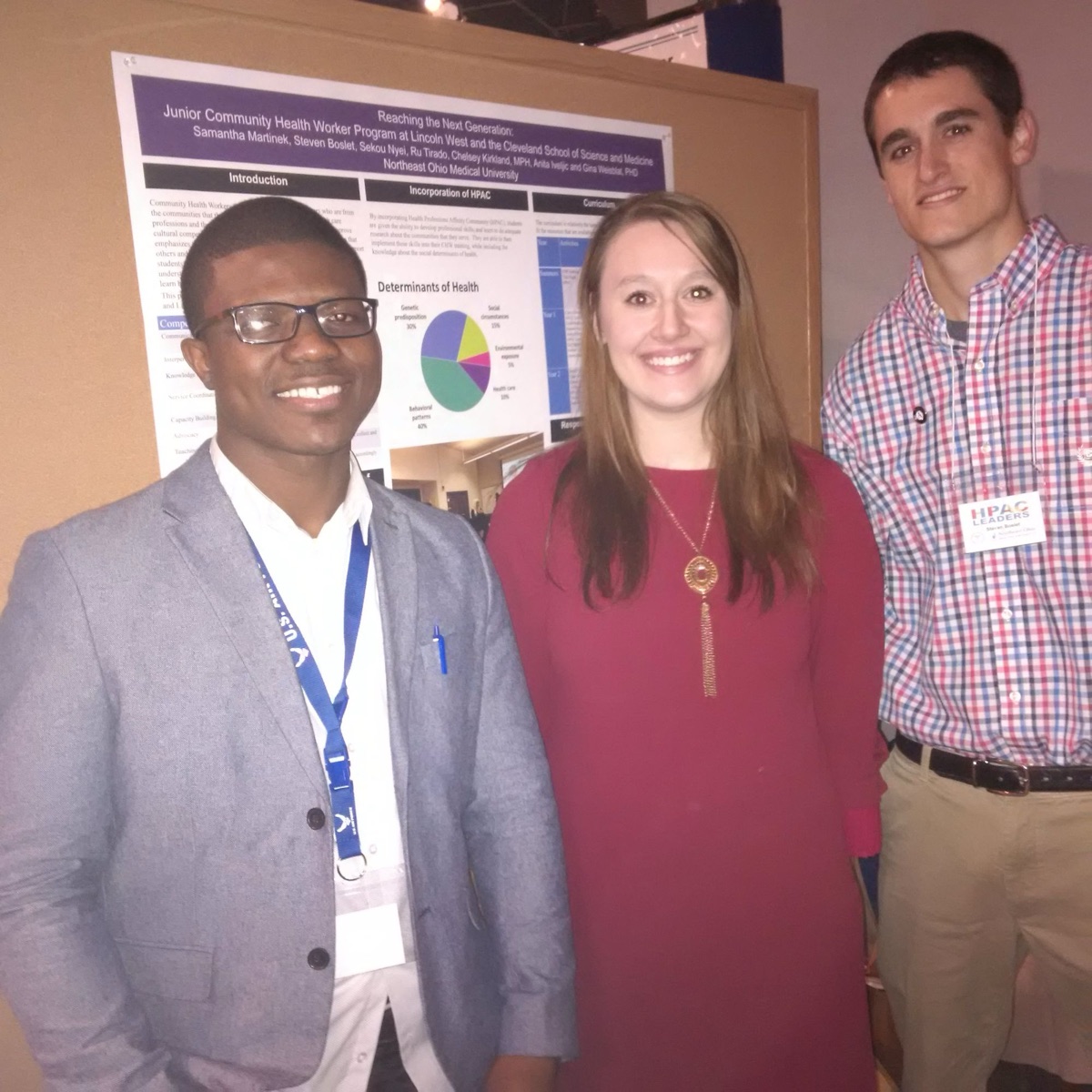
Three presenters beside the Junior Community Health Worker Program poster
Reaching the next generation: the Junior CHW program

Citizenship Health Conference, June 2018

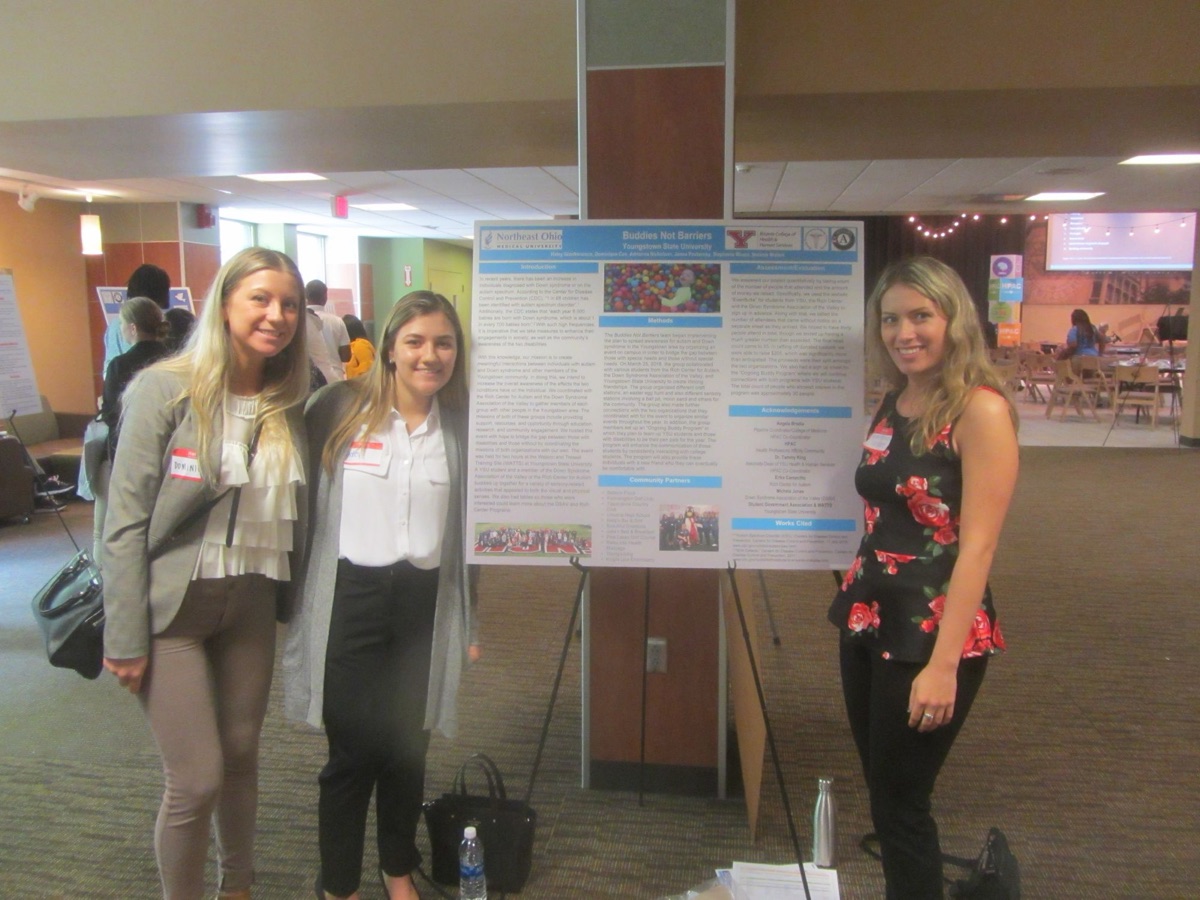
Three presenters beside the Buddies Not Barriers poster
Buddies Not Barriers, Youngstown State University
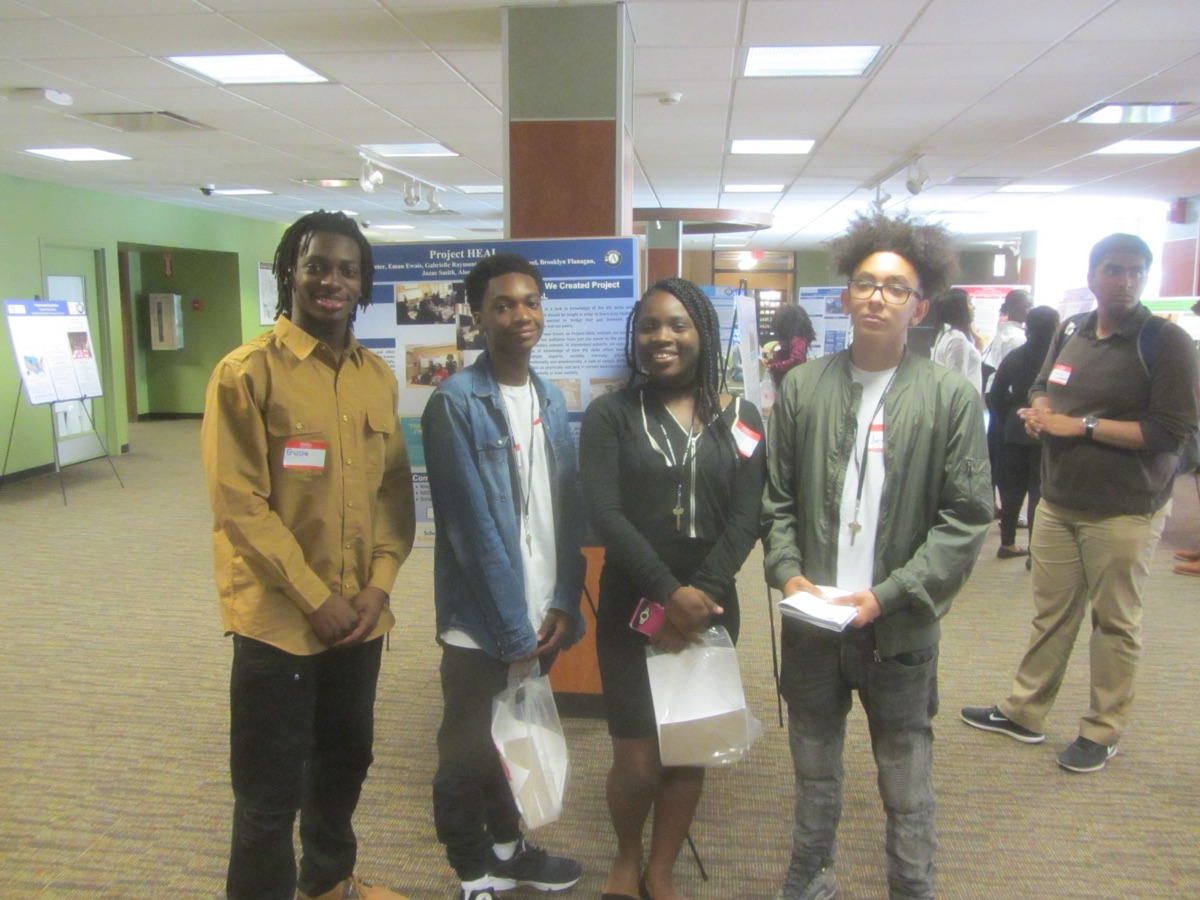
Four students in front of the Project HEAL poster
Project HEAL
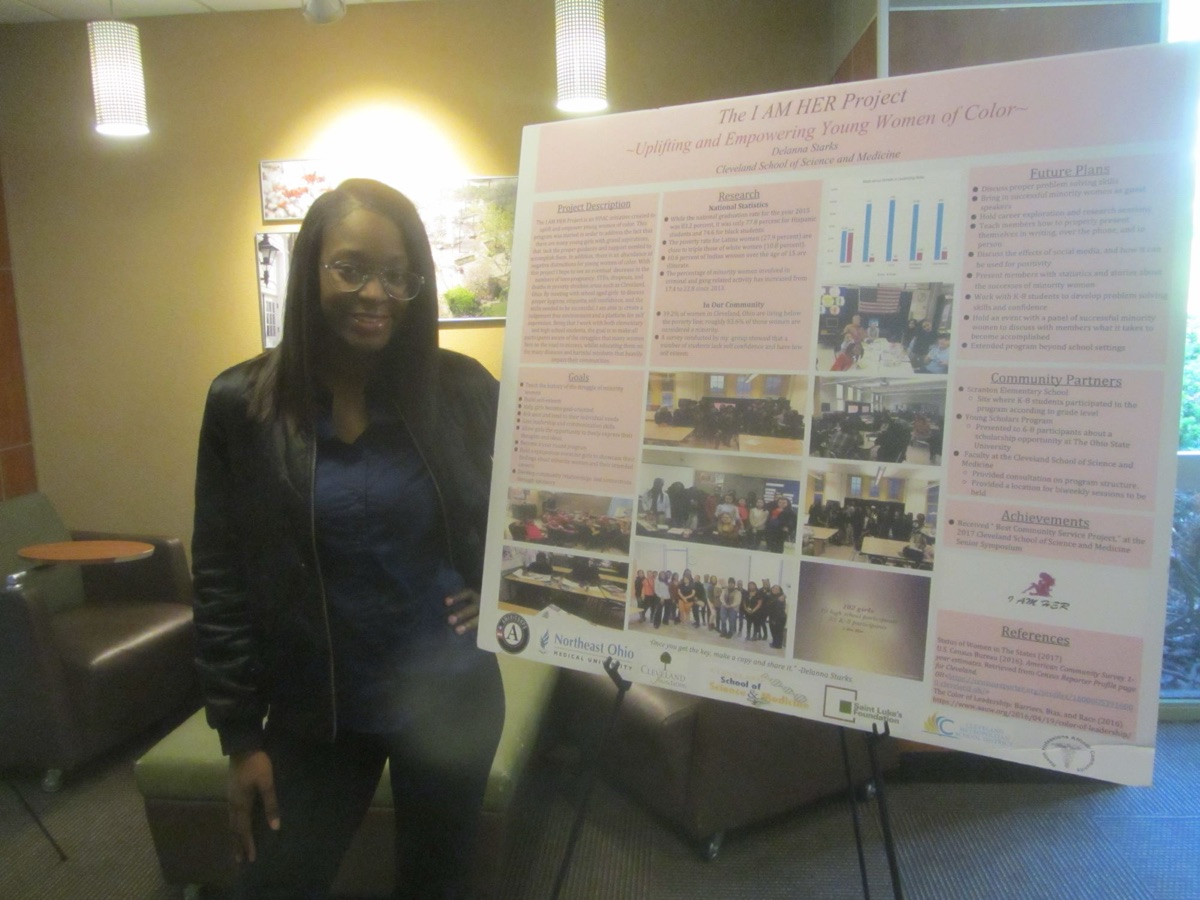
A student beside the I AM HER Project poster
The I AM HER Project, uplifting young women of color
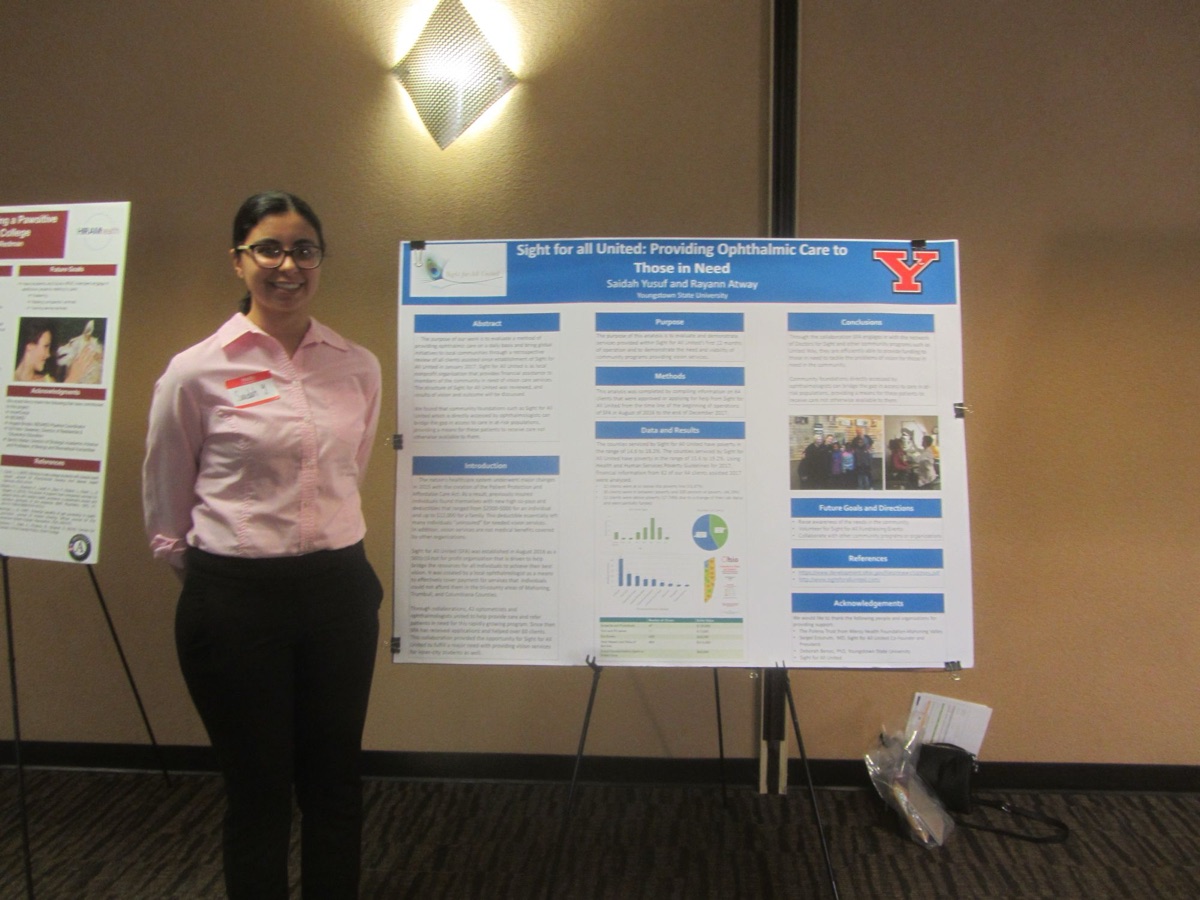
A student beside the Sight for All United poster
Sight for All United: eye care for those in need
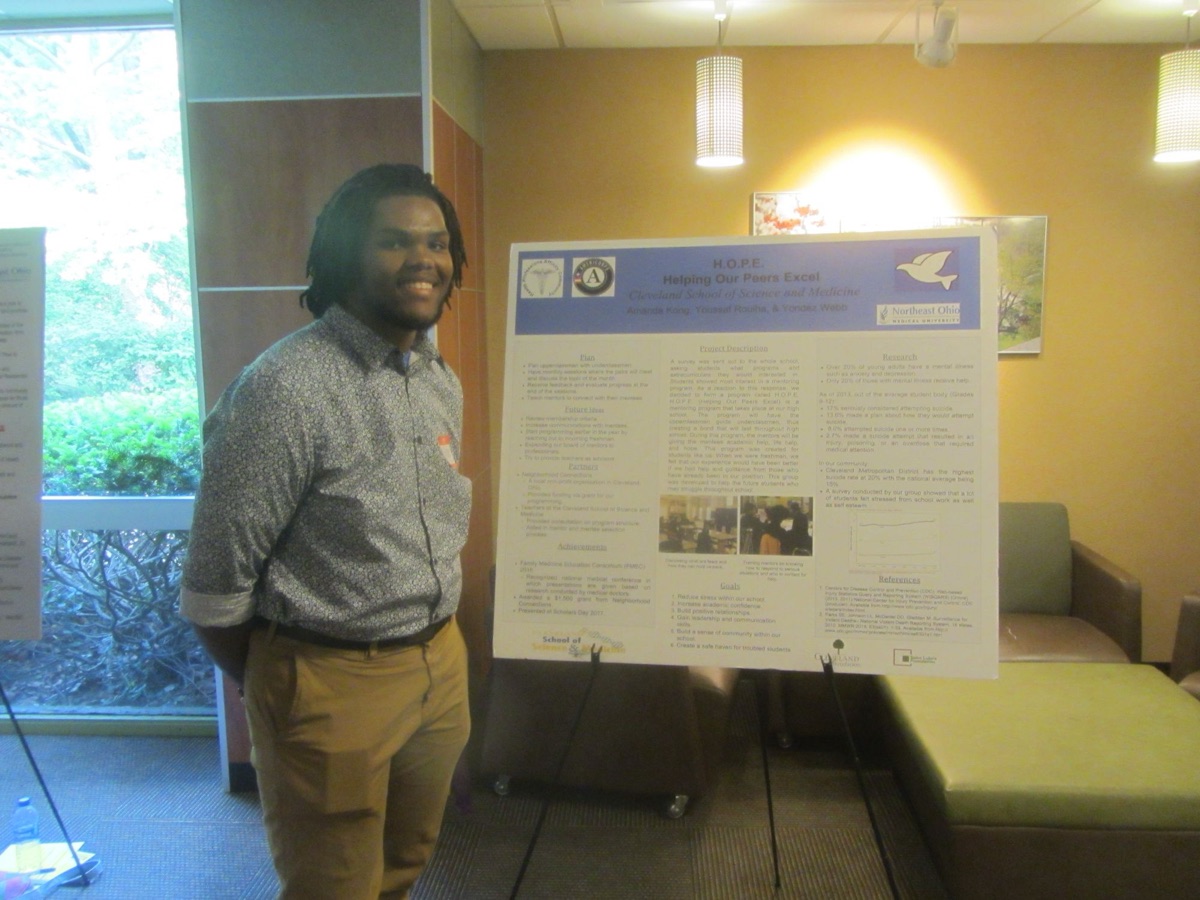
A student beside the H.O.P.E. poster
H.O.P.E. returns, a year on
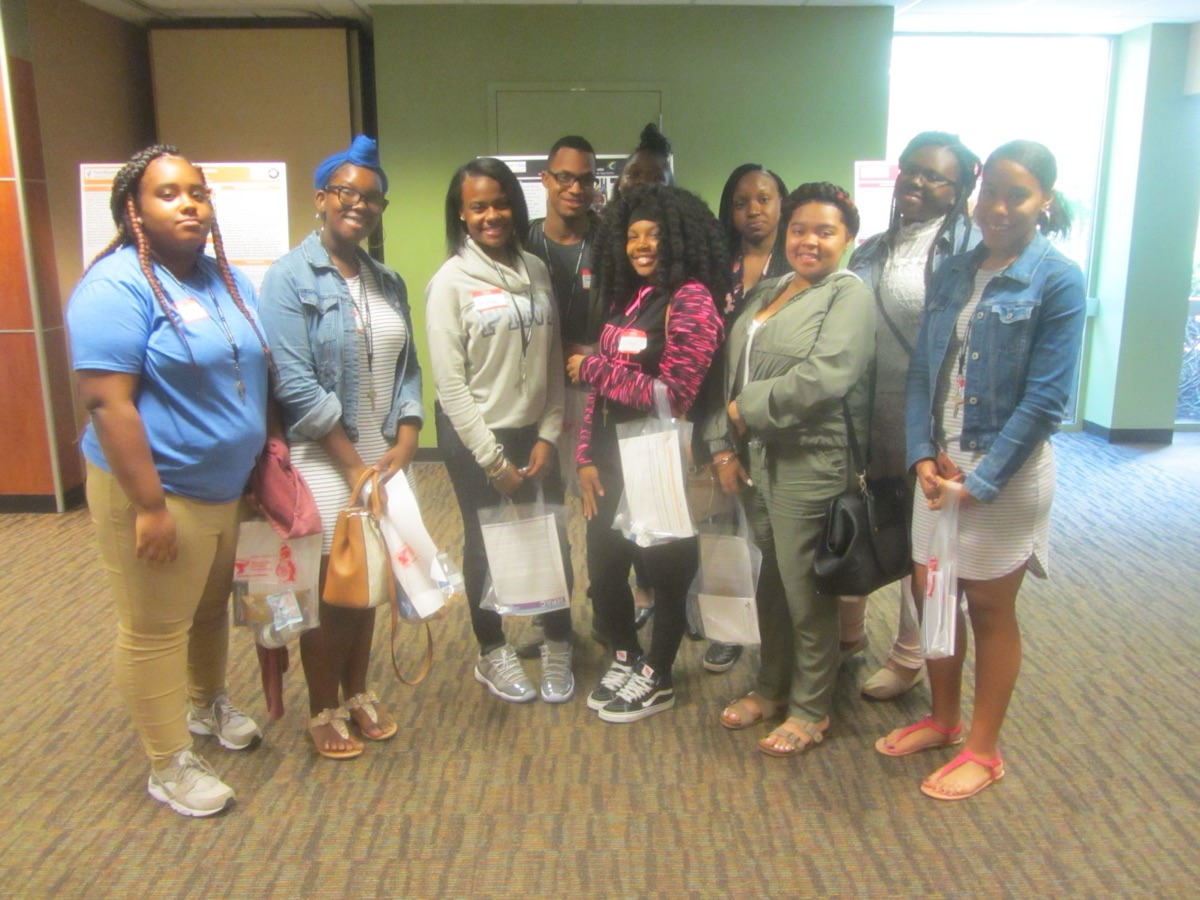
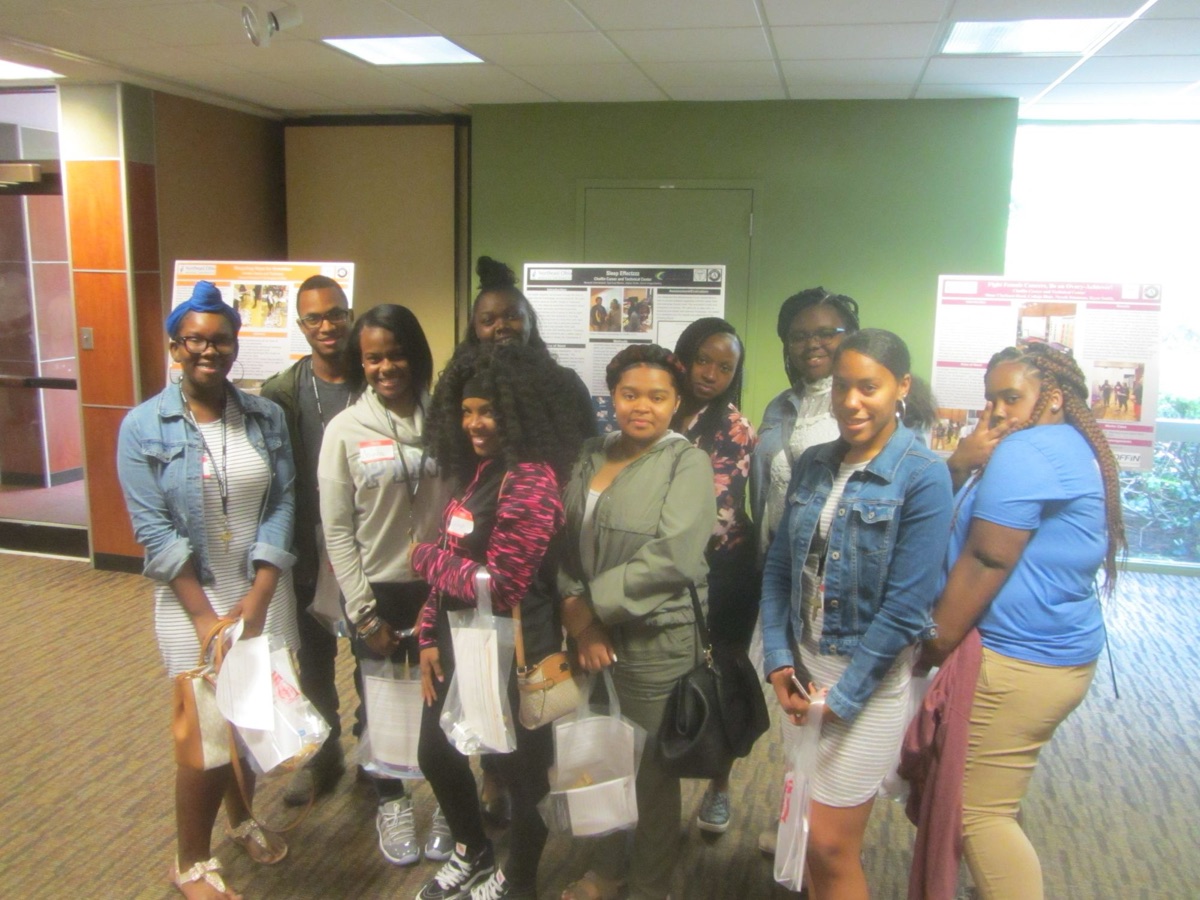
Ten students pose together in a hallway
A school delegation at the conference
Students pose in front of three posters
Posters from Chaffin Career and Technical Center
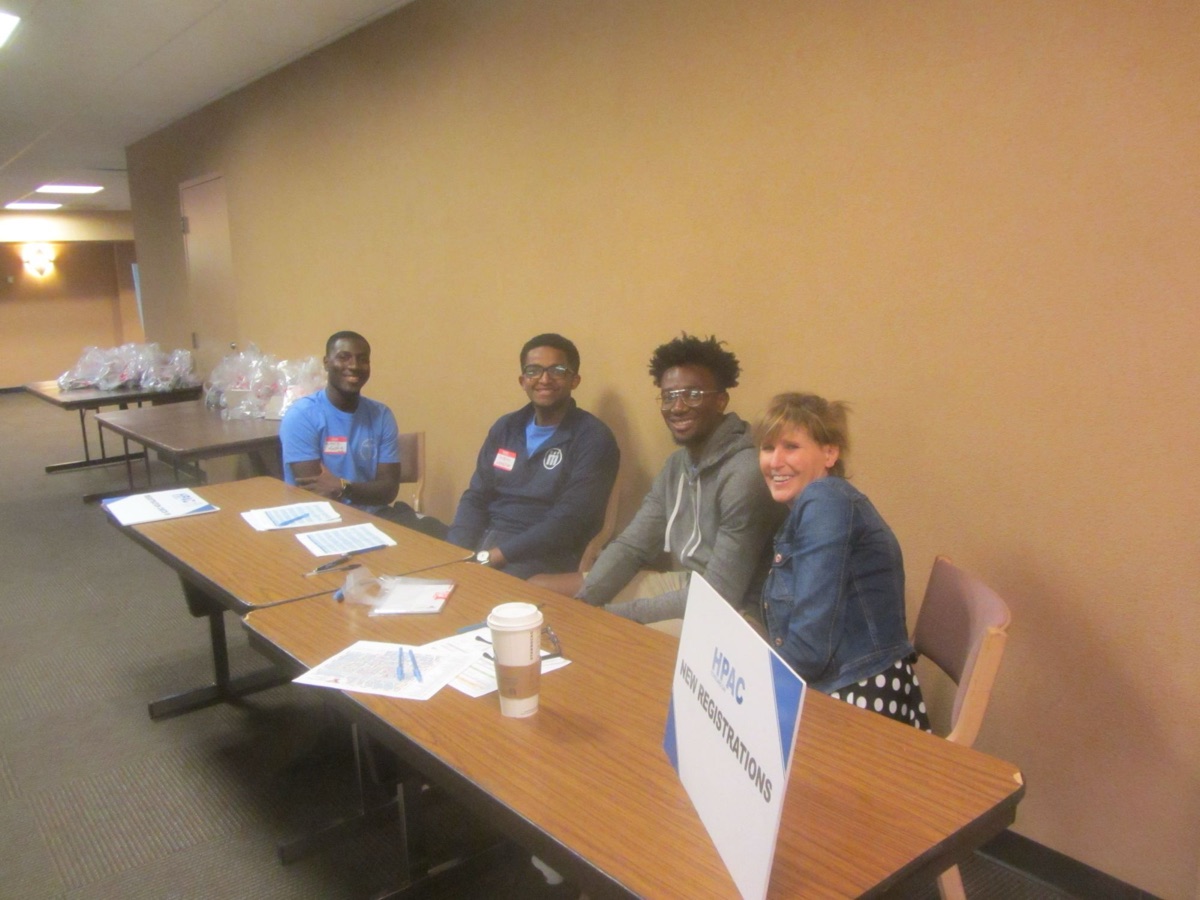
Four people at the HPAC new registrations table
The registration table

Lincoln West HPAC, June 2018, and Scholars Day 2018

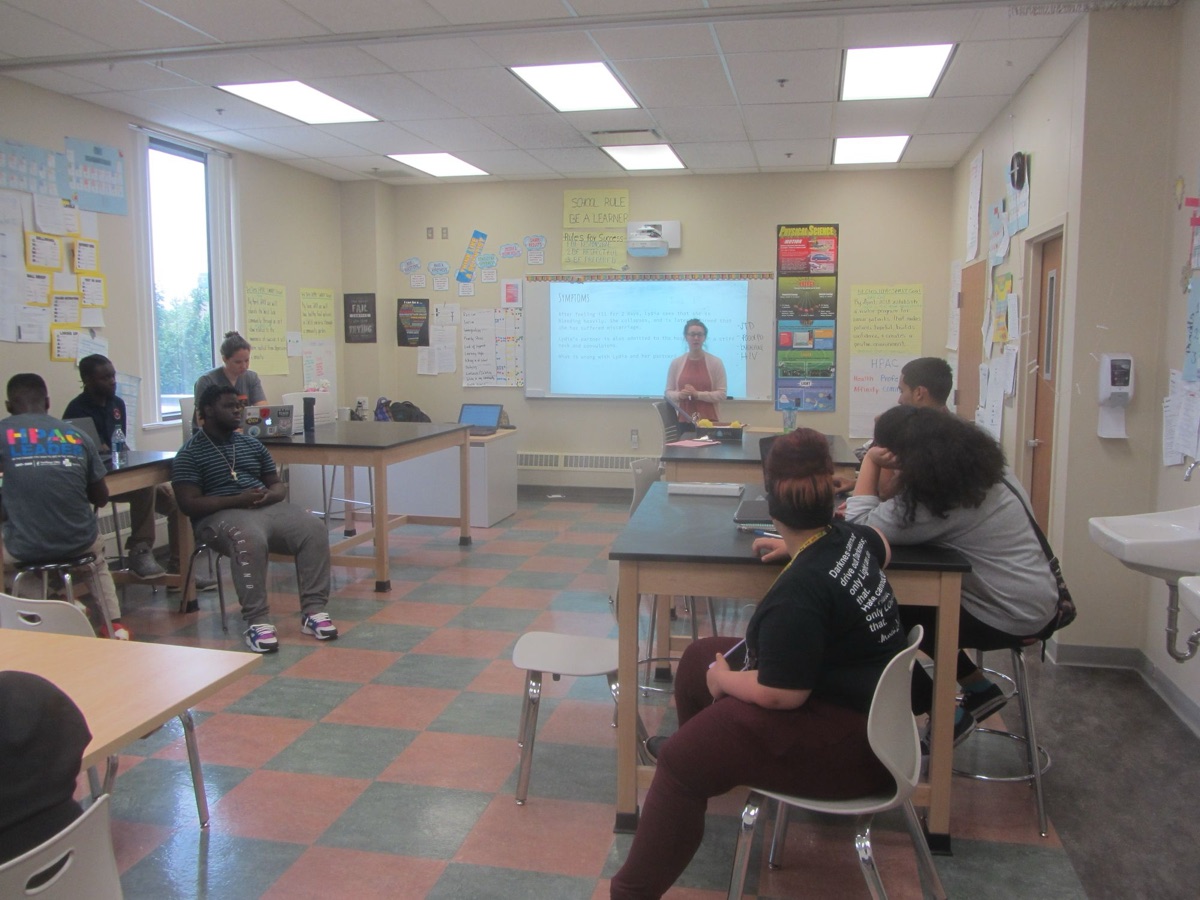
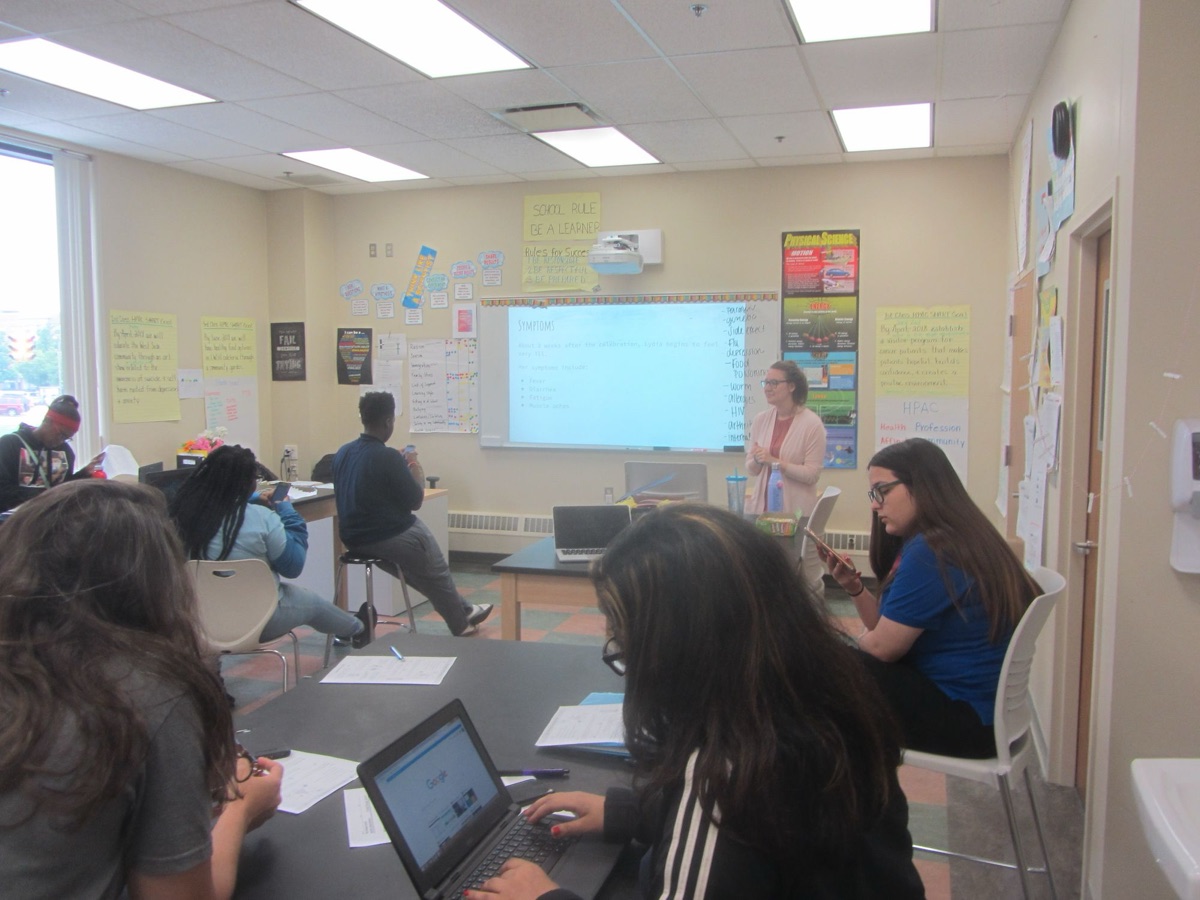
A facilitator leads a case study on a projected slide
A case study: what is wrong with Lydia?
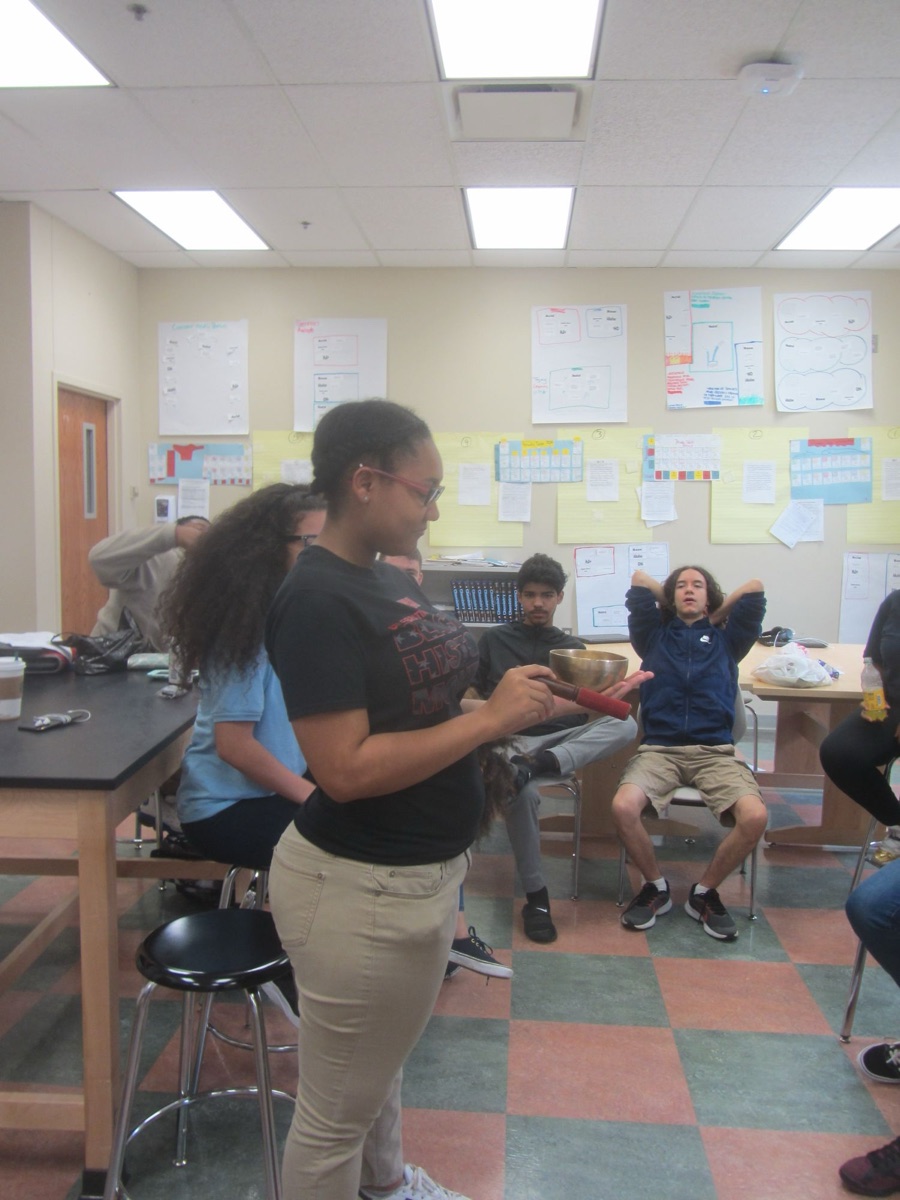
A student rings a singing bowl
Opening the session
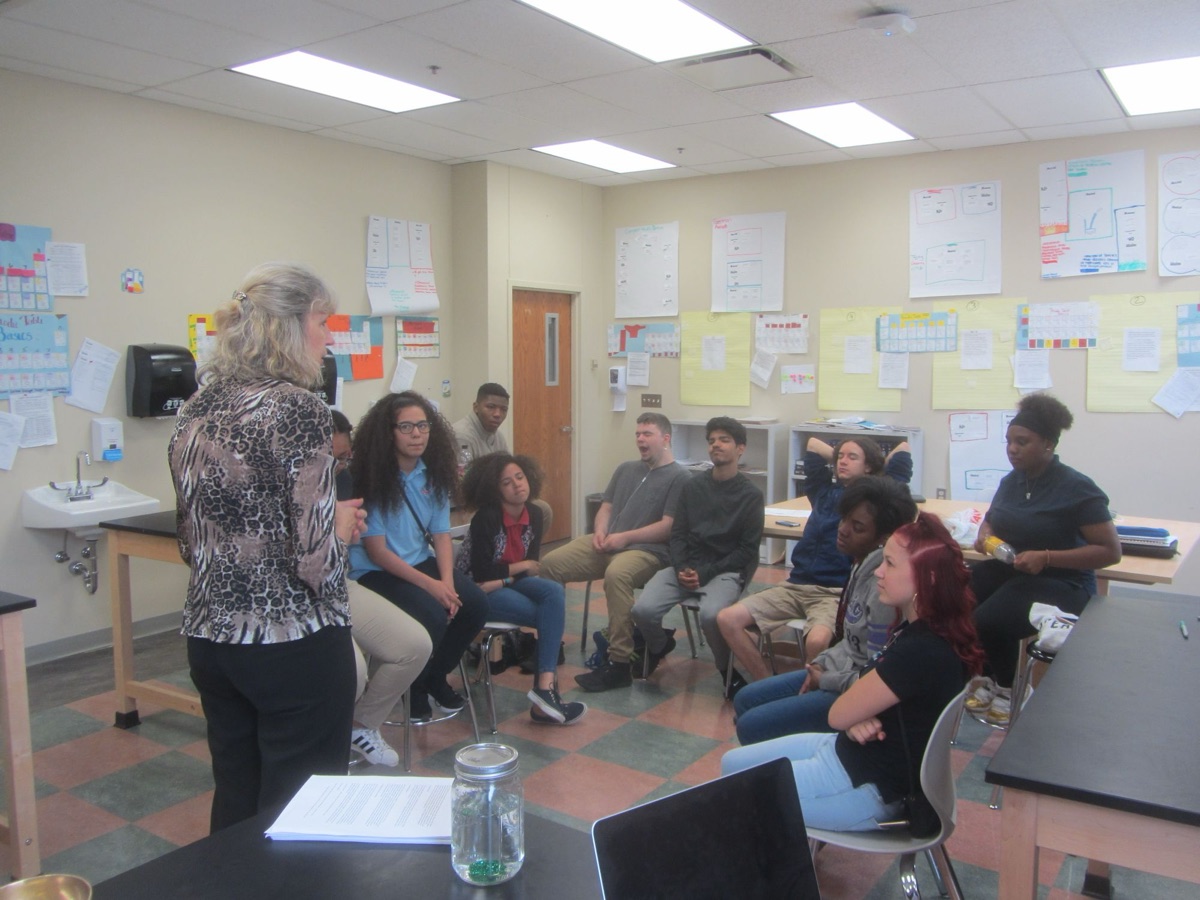
A facilitator speaks to students seated in a circle
The circle
Students at laptops during a lesson
Research time
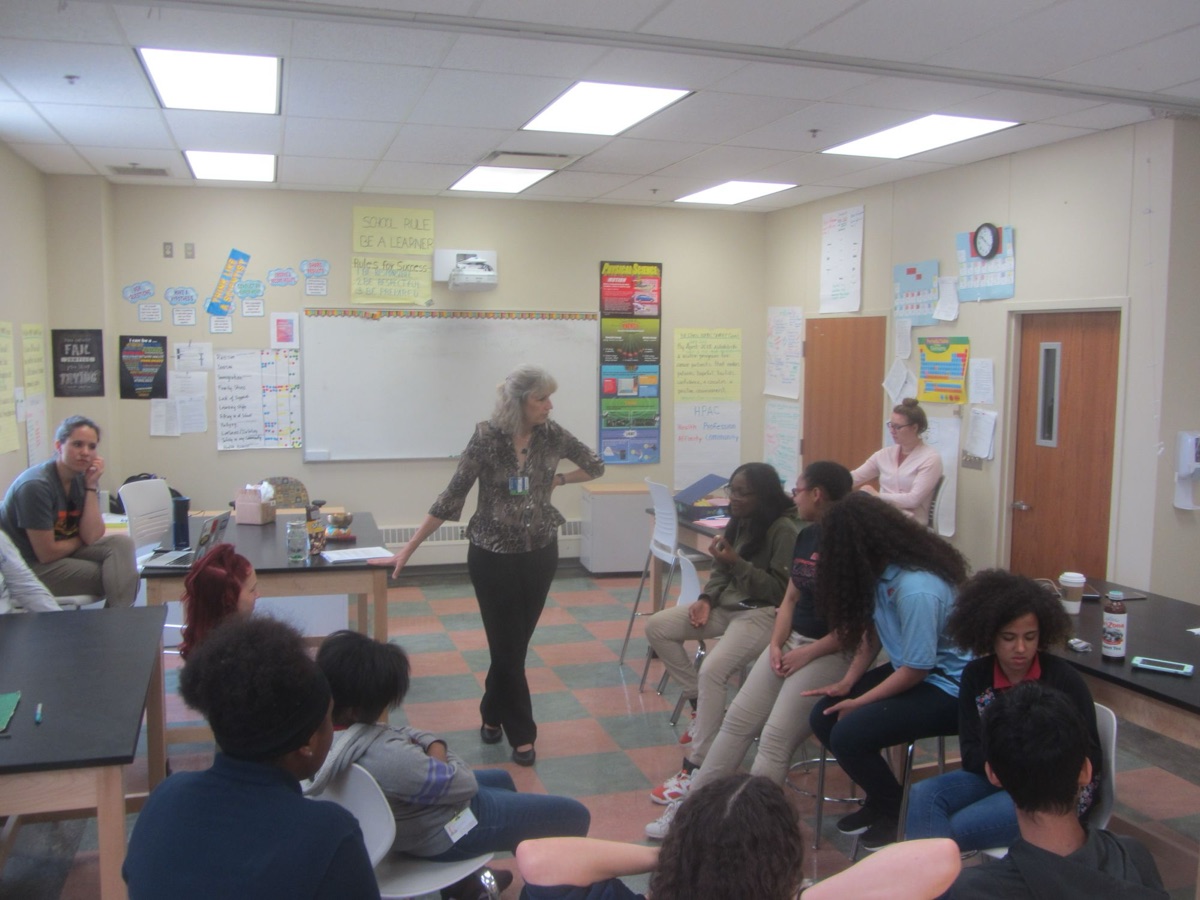
A wide view of the classroom circle
Every voice in the room
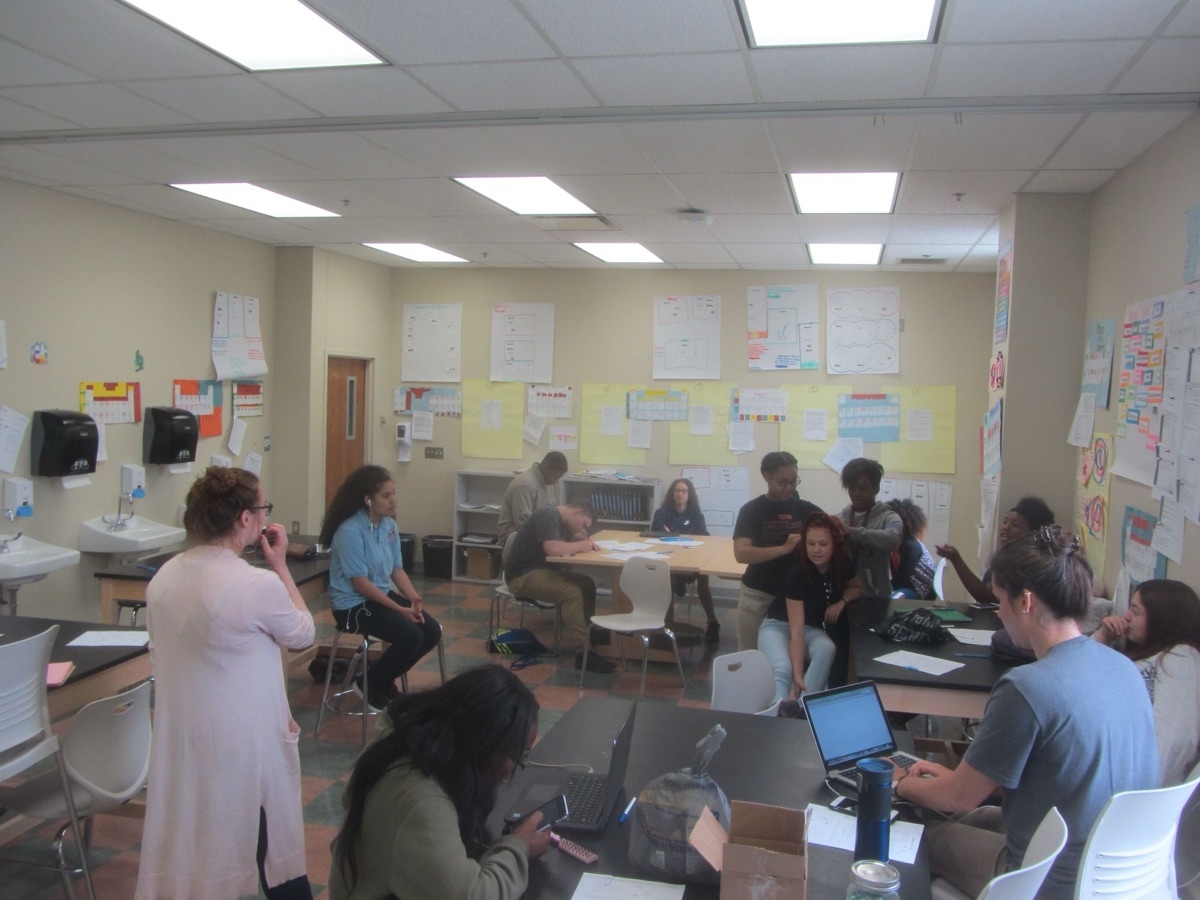
The HPAC classroom with posters on every wall
The HPAC room
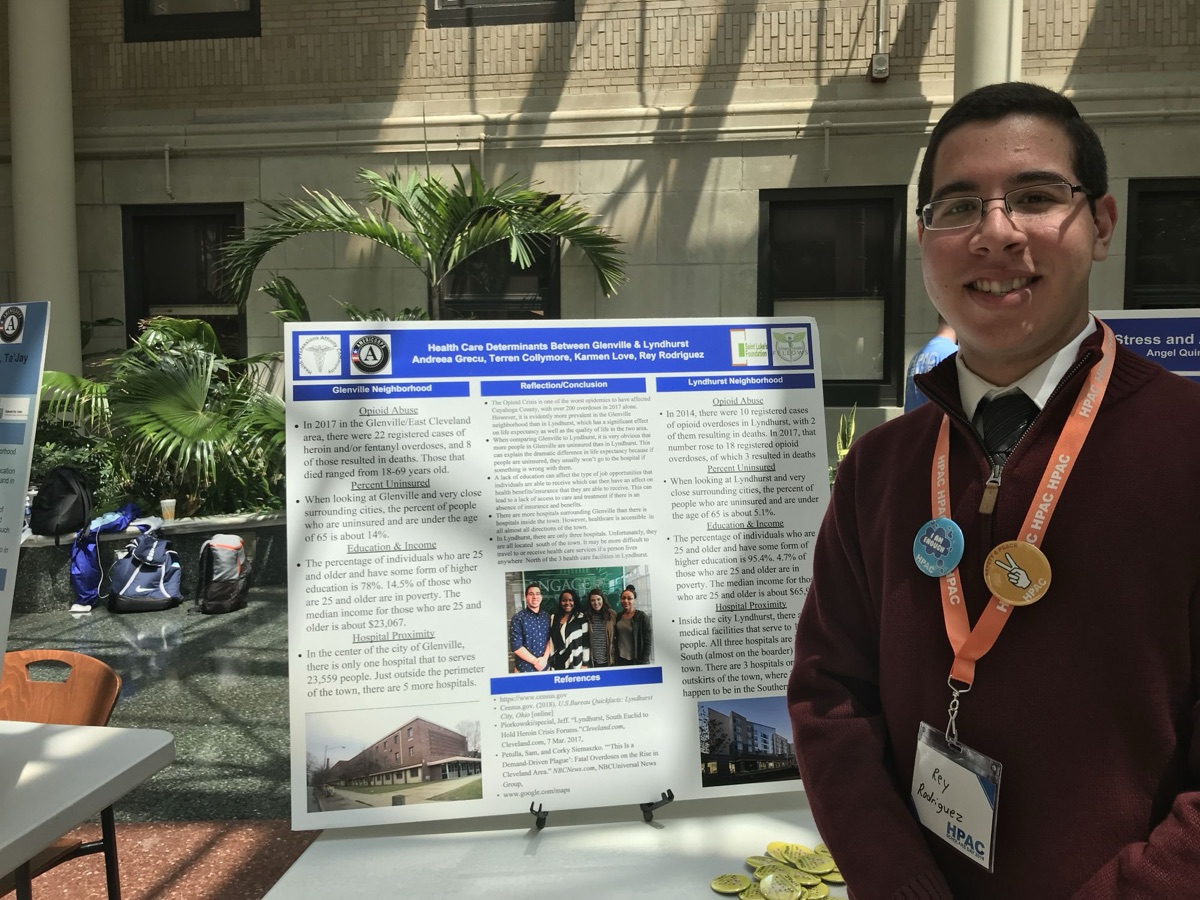
A student beside a poster comparing health care determinants in Glenville and Lyndhurst
Scholars Day 2018: Glenville and Lyndhurst compared

From the HPAC photo archive

Undated pictures from the program's photo folders. Places and years are being confirmed; no one is named.

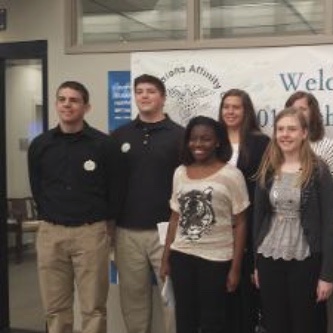
Students in front of the HPAC welcome banner at Scholars Day
Under the welcome banner at Scholars Day
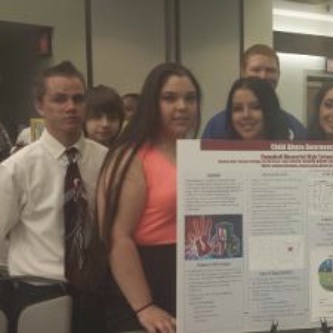
Students beside their child abuse awareness poster
Campbell Memorial's child abuse awareness poster
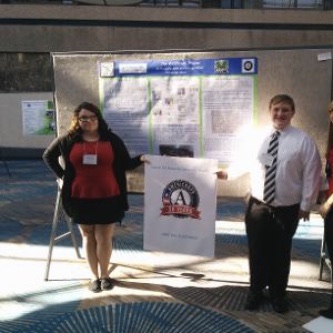
Two presenters beside a poster and an AmeriCorps banner
A poster session with the AmeriCorps banner
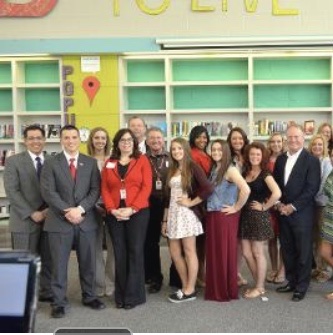
A large group of students and adults in a school library
A site visit in a school library
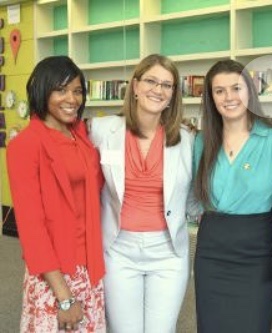
Three presenters in a school library
Presenters in the library
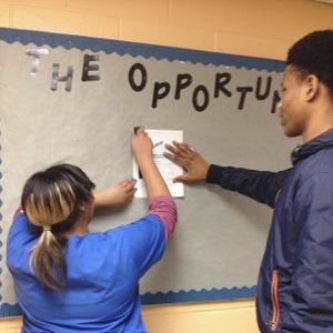
Two students pin a card to a bulletin board titled The Opportunities
Building "The Opportunities" board
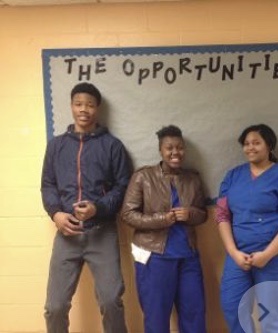
Three students in front of The Opportunities board
The team behind the board
Students at tables during an HPAC session
An HPAC session
A student team at a gym event with costumed characters
A team's community event in a school gym
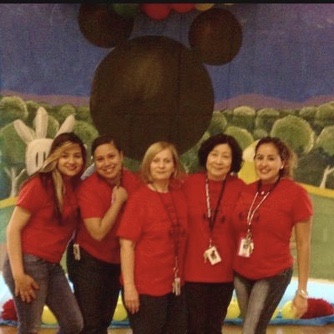
Five adult volunteers in red shirts in front of a painted backdrop
Volunteers at the event
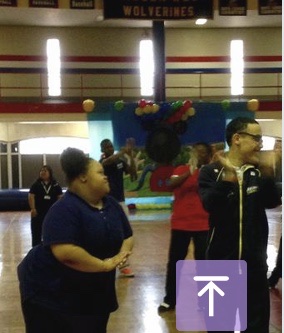
Students dancing in a gym
Dancing
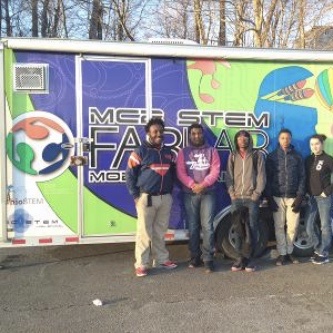
Students in front of the MC2 STEM Fab Lab truck
MC2 STEM's Fab Lab on wheels
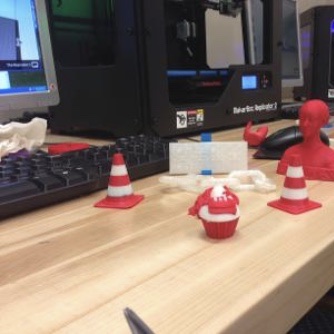
A keyboard, breadboard and small models on a table
A maker session
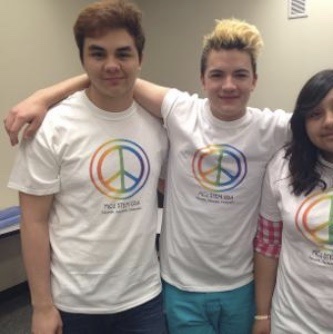
Three students in white peace-sign shirts
Team shirts
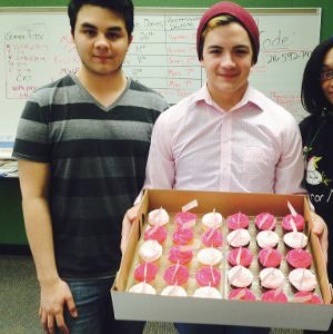
A student holds a tray of cupcakes
A bake sale
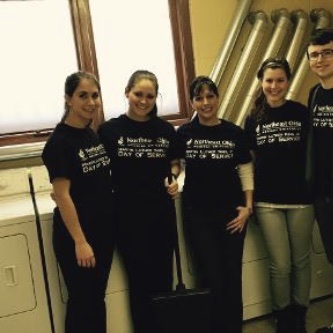
Two volunteers in NEOMED Day of Service shirts
NEOMED's Martin Luther King Jr. Day of Service
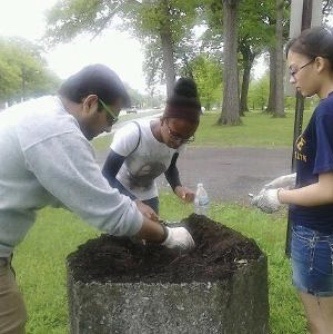
Students plant in a park bed
A park work day
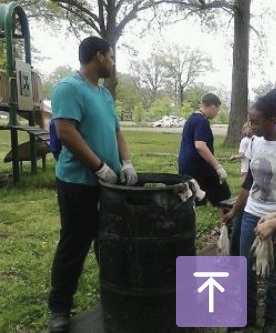
A student carries a barrel during a park cleanup
Park cleanup
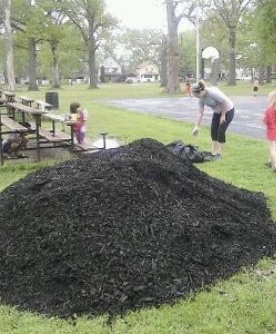
A pile of mulch in a park
Mulch, before the work
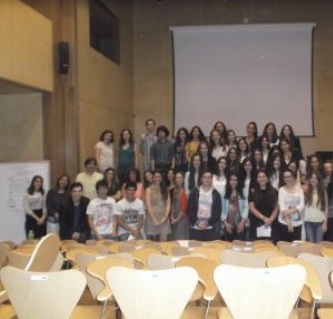
A large group of students in an auditorium
An HPAC-model session abroad: the whole group
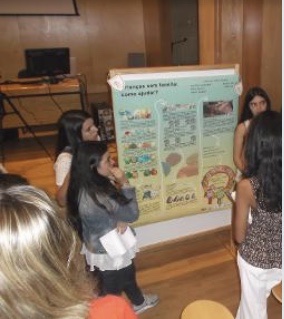
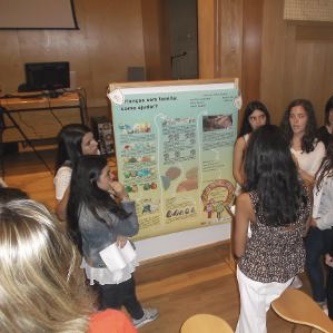
Students present a poster
Presenting a poster
Four students beside their poster
A team beside its poster
Dr. Weisblat on a projection screen during a video call
Dr. Weisblat joins by video
Two presenters at a panel table
A panel
Students seated in a lecture hall
In the lecture hall

Posters in these pictures carry student names, and the archive pictures show faces. Media releases are being collected before launch.

Scholars Day

Scholars Day by the numbers

Every HPAC team shares one stage each spring. Four years of event records, 2015 to 2018, survive in full. No student is named here; the research dataset behind these figures is kept by the Institute.

2015
745 registrations from 23 counties

517 unique registrants; 511 students, 52 parents, 26 administrators and 41 guests among the 633 analyzed. 52 oral presentations, 99 posters, 47 volunteer judges. Of those reporting race, 23.5 percent were African American.

Registration frequencies, April 27, 2015; program spreadsheets
2016
900 registered, 784 attended

From 85 schools: 620 students, 52 teachers, 41 family members, 33 judges. 174 presentations in 7 poster galleries. Half of those reporting race or ethnicity were from underrepresented minority groups; 58 percent asked for more HPAC information when they signed up.

2016 registration export and results deck
2017
1,012 registered, 789 attended

559 students (452 in high school, 50 in grades 6 to 8, 60 in college), 62 family members, 55 teachers, 33 judges. 152 named projects and 490 presentation entries across posters, talks, exhibits and videos.

Check-in workbook and registration status, April 2017
2018
686 registered by April 10; 238 presentations

541 high school students from 36 schools and 53 college students from 6 institutions. 151 posters and 87 talks in seven color zones, led by mental health, and substance use, stress and sleep. 489 students and 177 adults answered surveys on the day.

Planning deck, April 10, 2018; 2018 surveys

What students said in 2016 (527 exit surveys)

  • 87% were satisfied or very satisfied with Scholars Day; 90% with HPAC.
  • 85% said they were more likely to take part in HPAC next year.
  • 87% more likely to do community service; 84% more likely to connect with community members.
  • 79% more likely to do well in school; 68% more likely to earn a health professions degree.
Post-event student evaluation, April 2016 (means 4.26 and 4.39 of 5)

What students chose to work on in 2017

  • Community Health: 44 projects
  • Mental Health: 34
  • Stress and Anxiety: 18
  • Substance Abuse: 15
  • Violence and Crime: 12
  • Nutrition and Food Insecurity: 12
  • Obesity and Wellness, Injuries and Prevention, Reproductive and Women's Health, Housing: the rest
NEOMED project categories, 2017 (a project can carry more than one)

Before and after HPAC, in students' own ratings (2018, 489 surveys)

Students rated themselves from 1 to 10 as they were before HPAC and as they are now. Every change is statistically significant.

  • Ability to affect change in my community: 5.4 to 8.4
  • Ability to identify community resources: 5.6 to 8.1
  • Level of motivation: 6.1 to 8.5
  • Ability to build social connections: 6.3 to 8.5
  • Belief that the community can come together to make positive change: 6.2 to 8.7
  • Using research to understand health concerns: 6.4 to 8.7
Spring 2018 CORE post-test, Wilcoxon signed ranks p < .001; retrospective self-ratings

What they want to become (2018, 441 answers)

  • Physician or surgeon: 24%
  • Nursing: 14%
  • Physical, occupational or speech therapy, athletic training: 12%
  • Mental health and social work, physician assistant, dentistry, pharmacy, allied health: 22%
  • Science, engineering, education, law, business and the arts: about 15%
  • Undecided: 3%
Open-ended answers on the 2018 post-test, grouped by keyword by the Institute; to be reviewed

What the adults saw (Scholars Day 2018, 177 surveys)

  • Parents, judges, administrators, guests and partners rated HPAC students before and after watching the day. "Demonstrate leadership" rose from 5.5 to 8.5; "understand how to identify health disparities" from 6.2 to 8.6.
  • 88% left with a better understanding of the social determinants of health; 73% expected to come to another HPAC event.
  • Only 37% thought parents were actively engaged, a gap the program named for itself.
Parent, judge and community partner survey, May 2018

The year before Scholars Day (2017, 536 surveys)

  • Compared with peers not in HPAC, 84% said HPAC students can identify life goals, 82% can break a big idea into steps, 82% take part with people different from themselves.
  • Peer ratings of motivation, organization and social connection all rose from fall 2016 to spring 2017 (means 7.5 to 7.7, 7.3 to 7.6, 7.8 to 8.1).
  • Between 66% and 69% said they learned the most or a lot about each IDEAS step, from identifying a concern to evaluating the project.
CORE questionnaire, Scholars Day 2017
Watch

HPAC projects and events on video

Students, teachers and partners tell the HPAC story in their own words: Scholars Day, school projects, health fairs, ceremonies and student voices, 2016 to 2019. Press play on a card; nothing loads until you do.

More videos are being added. Each one is checked once before the site goes live.

Poster archive

A decade of student projects

Student posters from Scholars Days and conferences across Ohio. Choose a poster to see it full size. Topics ranged from teen stress and body image to autism, school nurses, fitness, homelessness and health literacy.

HPAC students can now train as community health workers

Pathway C of the Citizenship Health CHW Academy lets HPAC students in grades 10 to 12 complete Ohio's full CHW curriculum alongside their team project, then apply for the Ohio CHW certificate at 18 with their diploma. The credential is on Ohio's industry-recognized credential list for health.

See Pathway C

Start an HPAC in your school or community

We train facilitators and help schools, colleges, congregations, and community organizations launch their own HPAC teams. The student research modules, project calendar, grant application and judging rubric are on the High Tech page.

Talk with us